

Sustainability · 2025
In this section49 topics
- Sustainability Policy4 items
- Sustainability Goals & UN SDGs3 items
- Policy Review3 items
- Business Value Chain1 item
- Stakeholder Analysis2 items
- Environmental Policy & Guidelines5 items
- Environmental Policy Review3 items
- Energy — Plan & Guidelines2 items
- Energy — Electricity Consumption1 item
- Energy — Fuel Consumption1 item
- Energy — Targets2 items
- Energy — Performance & Outcomes2 items
- Water — Plan & Guidelines2 items
- Water — Withdrawal, Discharge & Consumption1 item
- Water — Targets2 items
- Water — Performance & Outcomes2 items
- Waste — Plan & Guidelines2 items
- Waste — Generation, Disposal & Recycling1 item
- Waste — Targets2 items
- Waste — Performance & Outcomes2 items
- GHG — Plan & Guidelines2 items
- GHG — Emissions2 items
- GHG — Emissions Verification2 items
- GHG — Principles & Standards1 item
- GHG — Targets1 item
- GHG Targets — Other Targets1 item
- GHG — Performance & Outcomes2 items
- Environmental Legal Incidents1 item
- Other Environmental Management1 item
- Social Policy & Guidelines5 items
- Social Policy Review1 item
- Human Rights Due Diligence2 items
- Employees — Plan & Guidelines3 items
- Employees — Workforce4 items
- Employees — Remuneration & Provident Fund2 items
- Employees — Training & Development2 items
- Employees — Occupational Health & Safety2 items
- Employees — Labour Relations2 items
- Employees — Employee Representation2 items
- Employees — Targets2 items
- Employees — Performance & Outcomes2 items
- Customers — Plan & Guidelines5 items
- Customers — Satisfaction Results1 item
- Customers — Targets2 items
- Customers — Performance & Outcomes2 items
- Community & Social — Plan & Guidelines3 items
- Community & Social — Targets2 items
- Community & Social — Performance & Outcomes2 items
- Law Violation Incidents1 item
Sustainability Policy
Has a Sustainability Policy
Yes
Policy Description
The Company is committed to conducting its business to achieve stable and sustainable growth, while upholding its responsibility toward society and the environment. We recognize that sustainability issues are critical to competitiveness, risk management, and the creation of long-term value for all stakeholder groups. This is especially important in the industry of vegetable oil production, shortening, and margarine, which is directly associated with the use of natural resources, food safety, environmental impact, and stakeholders throughout the supply chain. The Company therefore strives to ensure that its business operations align with this direction.
The Company has established a Sustainability Management Policy as a framework to guide responsible, transparent, and long-term impact–conscious operations. The Policy covers the Environmental, Social, and Governance (ESG) dimensions and applies to all activities of the Company, its subsidiaries, and related operations across the supply chain. The Company is committed to complying with all relevant laws, regulations, and standards, while conducting business ethically to enhance transparency and reinforce stakeholder confidence.
The Board of Directors assumes a pivotal role in defining the strategic direction and providing systematic oversight of the Company’s sustainability efforts. Sustainability considerations are integrated into the corporate strategy, operational plans, and risk management processes to ensure that the business creates long-term value for shareholders, customers, employees, communities, and society as a whole. The implementation of this policy encompasses the Company’s core business activities, including vegetable oil refinery, crushing mill, biogas-based electricity generation, as well as the import and distribution of oil products domestically and internationally.
The Company has established a sustainability framework that spans the entire value chain—from raw material sourcing, production processes, energy and resource utilization, employee and labor management, and product safety and quality assurance, through to engagement with business partners, customers, communities, and other stakeholders—ensuring a balanced application of ESG principles. In addition, the Company integrates the United Nations Sustainable Development Goals (SDGs) into its strategy and business operations to support stable and sustainable growth while reinforcing responsibility toward stakeholders.
The Company has also established a Sustainability Policy to foster balanced and long-term economic, social, and environmental development, supported by a clearly defined operational framework, as follows:
1. Quality of Work Life
1.1 The Company is committed to take care of the quality of working life and employment for all employees by providing a suitable and safe workplace and environment to work safely including no exploitation from employees and neighboring communities.
1.2 Free prior and informed consent (FPIC) : the Company empowers all employees to express their opinions freely before making any decisions on the basis of sufficient information.
1.3 Quality of working Ifie of employee also includes small entrepreneurs within the supply chain.
1.4 Commitments to specific labor rights e.g., no child or forced/bonded labor; no unethical recruitment practices; and no discrimination or harassment in its supply chain etc., alignment with international frameworks e.g., the International Labor Organization (ILO)and United Nations Guiding Principles on Business and Human Rights (UNGPs), protection Kor grievance raisers, whistleblowers and human rights defenders.
2. Good Work Processes
The Company is committed to manufacture products with quality and safety by increasing efficiency and effectiveness under both domestic and international legal requirements as well as International Food Standards.
3. Conservation and Environmentally Friendly
3.1 No deforestation: The Company is committed to refraining from any deforestation in areas with High Carbon Stock (HCS) and High Conservation Value (HCV). The assessment of HCV–HCS areas is conducted in accordance with the HCV–HCSA Assessment Manual, utilizing the HCSA Toolkit and the recommended methodologies for identifying, managing, and monitoring HCV areas.
For the plantations of United Palm Oil Industry Public Company Limited, HCV assessments have been guided by the Global HCV Toolkit (Proforest, 2007) since February 2013.
3.2 No Peatland Development: The Company does not undertake planting, operations, or development activities on peatland, regardless of depth or extent.
3.3 No Burning: The Company does not conduct any forest burning for land preparation.
3.4 The Company reduces greenhouse gas emissions, minimizes waste sent to landfill and increases opportunities of reuse and recycle.
3.5 Implement an environmental management system to protect air, land and water from pollution.
3.6 Publish a concession map in RSPO report. The Company announced its commitment to No Deforestation, effective from 31 December 2015 onward.
4. Good Purchases and Services
The Company is committed to provide materials and services responsibly. The goal is not to cause harm or exploit from people or environment. This policy is applied to all sources of operations, subsidiaries and joint ventures of the Company. The supplier is expected to apply this policy in all of its operations including land, joint ventures and third-party suppliers.
5. Emergency Plan
A comprehensive and diversified risk management framework has been integrated into the Company’s sustainable supply chain management.
Policy Document Link
https://lamsoon.co.th/wp-content/uploads/2024/04/Sustainability-Policy-Eng_2024.pdf
Page Number in Report
1-2
Sustainability Goals & UN SDGs
Has Sustainability Goals
Yes
Goals Description
Our strategic plan and operational guidelines are categorized into the following sustainability dimensions:
Environmental Dimension
The Company is committed to managing resources efficiently and minimizing environmental impacts. Priority is placed on water and energy use throughout production processes, ensuring that wastewater treatment complies with applicable standards, reducing waste generation, and promoting the use of renewable energy—particularly the generation of electricity from biogas to reduce greenhouse gas emissions. The Company also emphasizes responsible raw material sourcing and ecosystem stewardship to mitigate impacts on biodiversity. The operational plans include:
Sustainable Packaging Development Project
Energy Conservation Project for Environmental Mitigation
Zero Waste Project (Eco Consumption)
Social Dimension
The Company places a strong emphasis on safety, quality of life, and capability development for employees and stakeholders. We are committed to elevating product quality and food safety standards to strengthen consumer food security, while concurrently promoting workplace safety, occupational health, and employee well-being. The Company also advances skills development and lifelong learning, fosters equality and diversity, upholds human rights, and conducts business with due consideration for community impacts—building constructive, mutually supportive stakeholder relationships. Our key initiatives include:
Organizing regional seminars to disseminate knowledge on the Company’s products across various regions.
Delivering specialized training programs to enhance employees’ technical competencies and adherence to quality standards.
Implementing public communications through both online and offline channels to strengthen stakeholder awareness and engagement.
Conducting training programs in collaboration with the Stock Exchange of Thailand (SET) and the Thai Institute of Directors (IOD).
Promoting RSPO awareness and practices among farmer groups.
Economic and Governance Dimension
The Company conducts its business in accordance with the principles of good corporate governance, with transparency and a strong commitment to ethical business practices. The Company complies with all applicable laws, regulations, and relevant standards, while actively promoting anti-corruption measures throughout the supply chain to build long-term confidence and sustainable value for shareholders and stakeholders. Our strategic initiatives include:
Nutritional Value Enhancement: Developing products that offer superior health benefits.
Quality & Nutrition Training: Strengthening expertise in product quality and nutritional standards.
Supplier Development Program: Elevating the standards and capabilities of our business partners.
Technological & Laboratory Advancement: Enhancing analytical methods and R&D capabilities.
Production Optimization: Modernizing machinery and refining manufacturing processes.
TPM Implementation: Executing Total Productive Maintenance (TPM) to maximize operational efficiency.
UN Sustainable Development Goals
| SDG Goal |
|---|
| Goal 2 Zero Hunger |
| Goal 3 Good Health and Well-being |
| Goal 4 Quality Education |
| Goal 5 Gender Equality |
| Goal 6 Clean Water and Sanitation |
| Goal 7 Affordable and Clean Energy |
| Goal 8 Decent Work and Economic Growth |
| Goal 9 Industry, Innovation and Infrastructure |
| Goal 11 Sustainable Cities and Communities |
| Goal 12 Responsible Consumption and Production |
| Goal 13 Climate Action |
| Goal 14 Life below Water |
| Goal 15 Life on Land |
| Goal 16 Peace, Justice and Strong Institutions |
| Goal 17 Partnerships for the Goals |
Policy Review
Policy Reviewed This Year
Yes
Policy Changed This Year
Yes
Review Details
The Board of Directors sets the strategic direction and oversees the Company’s sustainability policies. Management is tasked with developing action plans, targets, and KPIs aligned with ESG principles and the UN SDGs to ensure systematic, transparent, and responsible operations. Management regularly monitors and evaluates performance, reporting progress and material issues to the Board at scheduled intervals. This process supports informed oversight, strategic decision-making, and operational agility. Furthermore, the Company continuously reviews its sustainability performance to refine policies and strategies, fostering resilient business growth alongside long-term social and environmental responsibility.
Business Value Chain
Value Chain Description
The Company implements a strategic Value Chain Management framework to bolster its competitive edge and solidify its leadership within the palm oil and edible oil industries. By establishing a fully integrated network—spanning from upstream to downstream—we are committed to cultivating enduring and sustainable partnerships with our business associates. Our systematic approach to supply chain orchestration involves collaborative engagement with all stakeholders, including large-scale plantations and smallholders. Furthermore, we emphasize operational excellence
through the integration of innovation and industrial automation, the procurement of eco-friendly packaging, and the optimization of distribution logistics. Underpinned by continuous Research and Development (R&D), the Company ensures comprehensive traceability across all segments of the value chain, as detailed below:
1. Primary activities
(1) Production factors management or inbound logistics
The Company’s primary raw materials include crude palm oil and other crude vegetable oils, such as coconut oil. We prioritize systematic procurement and selection processes from the point of origin to final delivery ensuring that production processes meet quality requirements, uphold food safety, and remain environmentally responsible.
Supplier Selection and Sourcing Standards
The Company has established rigorous criteria for partners and raw material suppliers to elevate standards across the entire supply chain. Our suppliers are required to maintain management systems that align with international benchmarks, including:
Quality and Environmental Management: ISO 9001 and ISO 14001.
Food Safety and Hygiene Standards: GHPs, HACCP, and FSSC 22000, or other frameworks recognized by the Global Food Safety Initiative (GFSI).
These criteria ensure that our partners prioritize quality, safety, and environmental responsibility throughout their production, packaging, and logistics processes.
In additon, the Company operates a crude palm oil crushing mill in Trang and supports over 100 smallholder farmers through the 'Sikao-Wang Wiset Sustainable Oil Palm Smallholders Community Enterprise.' This group is RSPO-certified, ensuring the advancement of sustainable palm oil production with key objectives as follows:
Responsible Cultivation: Preventing encroachment on community forests and ensuring zero deforestation.
Best Management Practices: Implementing proper occupational health, safety, and environmental standards within plantations.
Sustainable Sourcing: Establishing a foundation for traceable procurement in alignment with Green Processing principles.
Through ongoing collaboration with local communities and the implementation of RSPO-certified practices across both plantation areas and the crushing mill, the Company is confident that its sourcing and raw material production processes are environmentally responsible. These efforts strengthen the credibility and integrity of the value chain from upstream to downstream in a sustainable manner.
(2.) Operations
Lam Soon (Thailand) Public Company Limited engages in the production and distribution of vegetable oil products, blended vegetable fats, margarine, and butter blends, as well as biogas-based electricity generation. The Company’s operations are systematically interconnected, covering end-to-end processes from product development, production planning, procurement of raw materials and packaging, quality control, and machinery maintenance through to human resource management—supporting efficient, safe, and environmentally responsible operations.
The Company’s production processes span the entire value chain and are divided into three principal segments:
Upstream and energy processes, including palm oil extraction and electricity generation from biogas;
Refining and fat processing, to produce oils and fats that achieve required product quality standards; and
Downstream processes, comprising blending, manufacturing, and packaging of margarine and butter blends.
The Company implements stringent quality control measures at every stage of the production process and continually enhances analytical techniques to improve accuracy and efficiency, ensuring consistent product quality. In addition, the Company imports and distributes food products from certified external manufacturers to expand product variety and meet market demand, complemented by effective outbound logistics management.
Beyond our internal manufacturing, the Company operates a strategic import and distribution business. We source vegetable oils, vegetable fat blends, margarine, and other food products from certified third-party manufacturers that meet all relevant standards. These products are packaged and distributed under the Company’s proprietary trademarks, enhancing our product portfolio and comprehensively fulfilling diverse market demands.
(3.) Distribution of Products and services or Outbound logistics
The Company has enhanced its distribution processes and models with a focus on product availability and timely delivery to customers. This includes expanding Distribution Centers to ensure adequate and appropriate storage capacity, as well as increasing the number of Distributor Hubs to cover all regions nationwide. These initiatives enable more efficient route management, allowing faster replenishment and improved delivery service to customers.
The Company has also engaged additional local transport providers to strengthen customer relationships and enhance customer experience while maintaining cost efficiency. Through this transformation, the Company has partnered with logistics providers equipped with robust management systems and advanced technology, enabling effective traceability, process control throughout the entire delivery cycle, and efficient product handover to customers.
(4) Marketing and Sales
The Company is committed to driving its marketing and sales operations with a consumer-centric approach, supported by data-driven marketing insights, to develop communication strategies that align with the behaviors and needs of each target consumer group. The Company emphasizes delivering value and differentiation for its brands through product education, the selection of high-quality ingredients, and promoting appropriate consumption. These efforts aim to strengthen the brand image as a health-conscious and lifestyle-aligned choice for modern consumers.
The Company conducts integrated marketing activities across both online and offline channels, including digital media, point-of-sale media, cooking demonstration events, collaborative activities with business partners, as well as participation in trade exhibitions and various marketing events. These activities offer opportunities for consumers to experience the products firsthand, build engagement with the brand, and encourage purchase decisions, ultimately fostering long-term relationships and brand loyalty.
(5) Customer services
The Company places great importance on the satisfaction and confidence of consumers and business partners. It has enhanced its feedback and complaint-handling system to ensure convenience, speed, and traceability, enabling efficient and standardized responses across the organization. The Company also monitors and resolves issues in accordance with established plans.
Consumers and business partners can contact the Company through various channels, including the telephone number provided on product packaging, the Company’s website, and social media platforms such as the Company’s Facebook page. These channels allow for fast and convenient communication. The Company analyzes feedback and complaints to continuously improve product quality, service delivery, and internal processes, ultimately enhancing the long-term customer experience.
2. Supporting activities
(1.) Technology
The Company utilizes advanced, industry-standard machinery and technology specifically designed for the food industry, with a focus on minimizing environmental impact. We continuously refine our production processes to enhance efficiency, reduce waste, and lower energy consumption while elevating operational safety standards. Furthermore, we implement a systematic maintenance program for all machinery and equipment to ensure optimal performance, reliability, and workplace safety.
(2.) Strategic Procurement and Sourcing
The Company emphasizes policy-driven management by establishing a systematic procurement strategy. Our strategic framework is centered on the following key guiding principles:
1. Sustainable Supply Chain Management
The Company has institutionalized a Green Procurement Policy, prioritizing business partners who uphold rigorous environmental standards, implement efficient energy management systems, and demonstrate commitment to ESG (Environmental, Social, and Governance) principles. Furthermore, we conduct annual Human Rights Risk Assessment within our supply chain to mitigate potential risks. These measures are designed to ensure that our entire procurement process remains transparent, ethically sound, and socially responsible.
2. Leveraging Technology for Enhanced Operational Excellence (Digital Transformation)
The Company is advancing its procurement framework by transitioning toward a full-scale e-Procurement system. This initiative is designed to enhance transparency and agility through e-Bidding processes. Furthermore, we integrate advanced Data Analytics to improve demand forecasting accuracy for raw materials. By leveraging these digital tools, the Company achieves Inventory Optimization, effectively minimizing redundant stock levels while ensuring seamless operational continuity.
3. Supplier Audit and Capability Development
The Company conducts regular supplier audits covering quality, environmental management, safety, and human rights. In addition, the Company provides training programs to share knowledge on factory standards, safety practices, and environmental management guidelines, with the aim of enhancing the long-term competitiveness and capability of its suppliers.
4. Supplier Code of Conduct
The Company has strictly implemented a 'No Gift Policy' to govern ethical conduct and maintain professional integrity when engaging with business partners. This policy is fundamental in mitigating conflicts of interest and reinforcing a culture of transparency within our procurement operations. By adhering to these ethical standards, we ensure that all business dealings are conducted with the highest level of accountability and fairness.
5. Strategic Cost Management and Organizational Resilience
The Company prioritizes cost efficiency through the implementation of Total Cost of Ownership (TCO) analysis. This comprehensive framework encompasses all expenditures—including procurement costs, logistics, inventory carrying costs, and the opportunity costs associated with maintenance operations. By adopting this holistic approach, we maximize value creation and strengthen our financial resilience, ensuring the Company can effectively navigate market volatility and unforeseen crises.
The Company has integrated Power BI to enable real-time visibility and monitoring of raw material status. To mitigate the risk of supply chain disruptions, we have implemented Dual and Multi-Sourcing strategies for critical materials. This proactive approach ensures business continuity and maintains seamless production cycles, even amidst heightened market volatility.
6. Elevating ESG through Circular Procurement
The Company drives its sustainability agenda through a Circular Procurement policy, granting preferential status to partners who implement reuse or recycling processes. Furthermore, we collaborate with our Tier-1 suppliers to establish shared targets for reducing Carbon Footprints. This collective effort is a key pillar in advancing the Group’s commitment toward achieving Net Zero emissions.
7. Supply Chain Risk Management and Business Continuity
The Company collaborates closely with business partners to develop Business Continuity Plans (BCP) and raw material risk management strategies. Through Supplier Engagement & Development, we foster sustainable mutual growth to safeguard against raw material price volatility, trade barriers, and geopolitical risks.
The Company maintains an Approved Vendor List (AVL) of qualified suppliers and employ a multi-sourcing strategy to mitigate dependency on single suppliers. By closely monitoring global market trends, we enhance supply chain resilience, ensuring proactive procurement planning and effective crisis response.
(3.) Human Resources and Community Engagement
The Company prioritizes strategic human resource management, focusing on recruiting and developing personnel to possess knowledge, capabilities, and skills aligned with their responsibilities. We provide continuous capacity-building programs to meet evolving quality standards, technological advancements, and future business challenges.
Management has established comprehensive human resource development policies to drive operational efficiency and strengthen internal knowledge management. A strong culture of safety is instilled across the organization, with strict adherence to safety regulations, resulting in a continuous reduction of workplace accident risks.
Furthermore, the Company is committed to being an integral part of the local community. We encourage employee volunteerism and actively engage in regular community activities. We maintain an open dialogue to listen to community concerns, ensuring we provide constructive support and sustainable solutions.
(4.) Corporate Governance Infrastructure
The Company maintains a clear and robust governance structure, with the Board of Directors and relevant sub-committees overseeing and establishing policies for sustainability. We have implemented a comprehensive risk management and internal control framework that encompasses the entire value chain. Furthermore, we are committed to strictly adhering to all applicable laws, international standards, and the principles of business ethics.
Regarding food safety and quality, the Company strictly operates in compliance with international standards, including GMP/GHP, HACCP, and FSSC 22000. Our quality control system is comprehensive, spanning from raw material procurement and production to packaging and final delivery. Furthermore, we ensure continuous verification and improvement through the CAPA (Corrective and Preventive Action) process, guaranteeing that our products consistently meet the safety requirements.
The Company places strong emphasis on developing and maintaining its Environmental, Health, and Safety (EHS) infrastructure by investing in essential systems such as wastewater treatment, industrial waste management, accident-prevention measures, and employee wellness programs. These initiatives ensure that our operations comply with safety standards and support long-term sustainability.
The Company recognizes the profound impacts of climate change and is committed to reducing greenhouse gas (GHG) emissions. To achieve this, we have invested in renewable energy initiatives, including biogas power generation and the installation of Solar Rooftop systems. These efforts are designed to enhance energy efficiency while significantly lowering our corporate carbon footprint and mitigating environmental impact.
In terms of digital integration, the Company utilizes SAP and SCADA systems to enhance production efficiency and ensure data transparency. We have implemented rigorous cybersecurity measures and data governance frameworks to safeguard the accuracy and reliability of our operational data. This ensures that the Board of Directors and executive management can leverage high-quality information for strategic and effective decision-making.
Stakeholder Analysis
Introduction
The Company conducts an annual Stakeholder Materiality Analysis, evaluating the levels of influence and impact across the entire value chain—from sourcing and production to product delivery. This ensures that key sustainability issues remain aligned with our corporate strategy and ESG goals. Our stakeholders include employees, shareholders, customers, local communities, suppliers, government agencies, NGOs, and contractors.
For each group, we have clearly defined engagement methods, communication frequencies, responsible departments, and Key Performance Indicators (KPIs) to ensure transparency and accountability. Feedback and engagement results are systematically integrated into our operational improvements and risk management strategies to create sustainable value. The Company prioritizes two-way communication, actively listening to expectations both internally and externally and engages directly with stakeholders across the value chain through a systematic process of gathering feedback and expectations. This approach allows us to refine policies, enhance processes, and evolve our quality, safety, environmental, and governance measures to remain resilient in a changing business landscape.
3.2.3 Material Topics
The Company prioritizes the identification and management of Material Topics to ensure that our operations align with the current business landscape, corporate strategy, and stakeholder expectations. Leveraging data from our value chain and stakeholder engagement, we assess impacts across every stage—from raw material sourcing and production to packaging, consumer delivery, and community relations. This rigorous assessment framework serves as the foundation for driving sustainable value creation and long-term business resilience.
Materiality Assessment
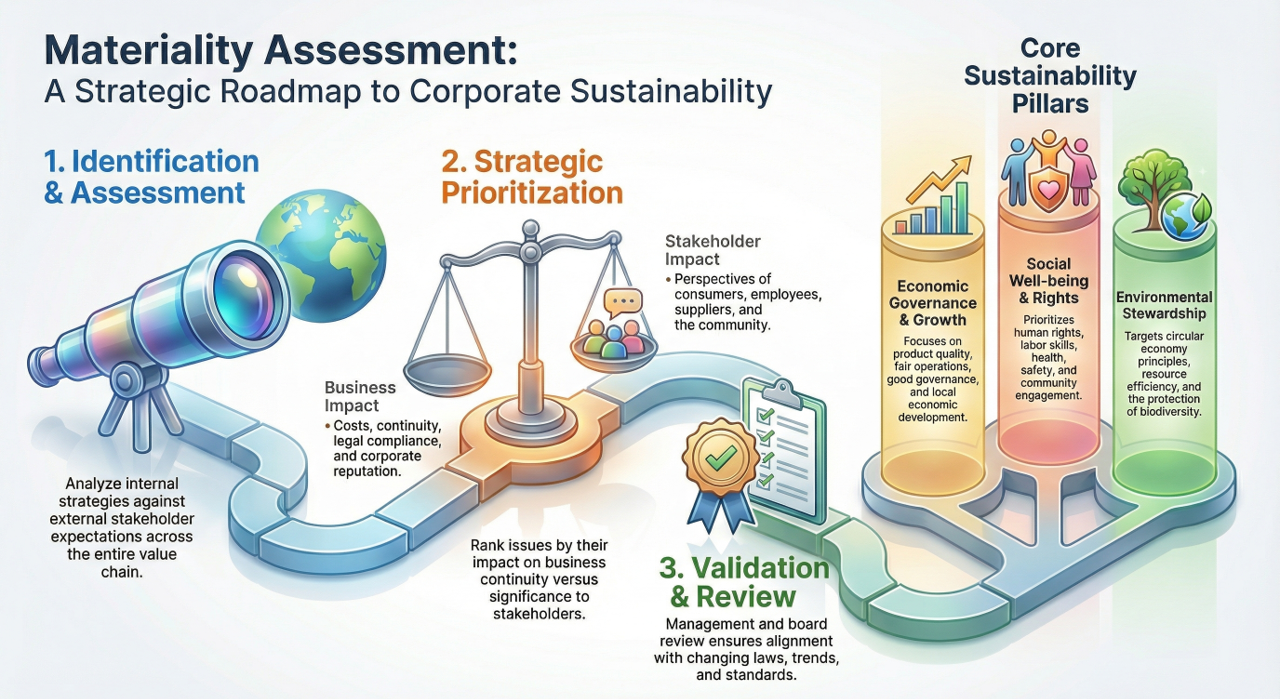
The Company conducts its materiality assessment through the following key stages:
1. Identification and Assessment of Material Topics
The Company identifies key sustainability issues that impact the Group and its stakeholders across the entire value chain, encompassing economic, social, and environmental dimensions. This process integrates Internal Factors such as operational performance, competitive advantages/disadvantages, and corporate strategy with External Factors, including stakeholder expectations and global industry sustainability trends.
Following the identification, topics are consolidated and prioritized to establish effective management frameworks. The assessment focuses on two critical dimensions:
Impact on Business and Corporate Strategy: Evaluating implications for costs, operational continuity, legal and regulatory compliance, and brand reputation.
Impact on Stakeholders: Evaluating the significance of impacts on consumers, customers, employees, business partners, local communities, and regulatory bodies.
2. Prioritization of Material Topics
The Company prioritizes material topics by evaluating the potential opportunities and impacts of each issue from the perspective of our stakeholders, encompassing economic, social, and environmental dimensions. This is conducted in tandem with an internal impact assessment aligned with the Enterprise Risk Management (ERM) framework. This dual-perspective approach ensures that the selected topics are strategically relevant, properly governed, and effectively integrated into our operational execution.
3. Validation and Review
The management team regularly reviews the assessment results, taking into account changes in laws and international standards, market trends, consumer expectations, and stakeholder engagement outcomes. This review also incorporates operational lessons learned and emerging risks. Finally, the prioritized material topics are presented to the Board of Directors for formal validation and approval, ensuring that our sustainability focus remains current and integrated with the Company’s strategic direction.
Economic
Product Quality& NPD)
Fair Business Operation
Good Corporate Governance
Regulation Compliances
Local Economic Development
Social
Well-Being for all)
Labor Skill Improvement / Human Capital Development (HRD)
Good Labor Practices and Human / Children Rights (HR & CR)
Health & Safety (Employees, Consumer, Supplier, Community
Community Engagement, Development, and Collaboration
Responsible Marketing (Labeling, Product Safety & Responsibility)
Environment
Circular Economy
Sustainable Consumption
Efficient Usage of Natural Resources (Water, Energy, Raw Material etc.)
Ecosystem, Biodiversity, Deforestation
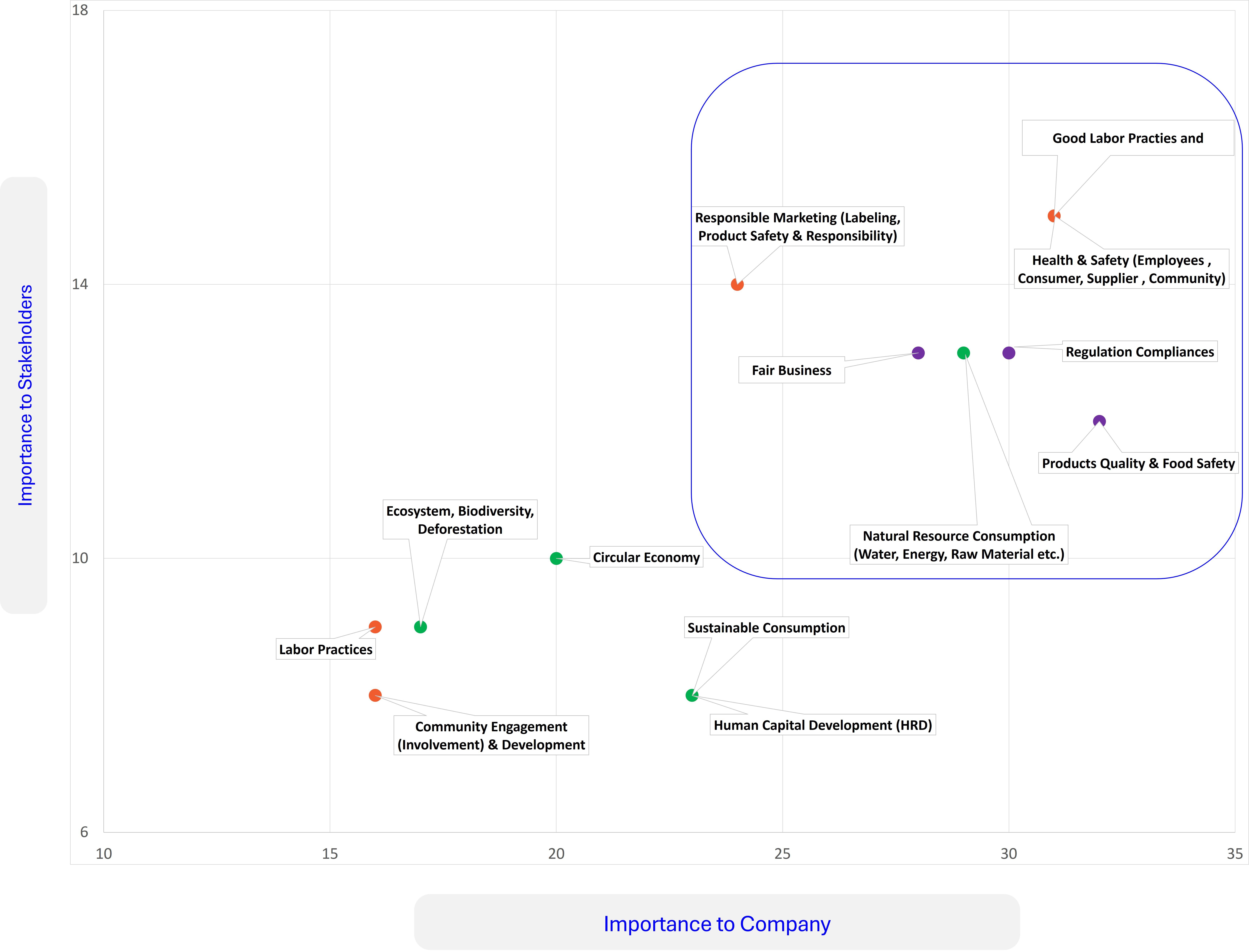
Materiality Assessment Results
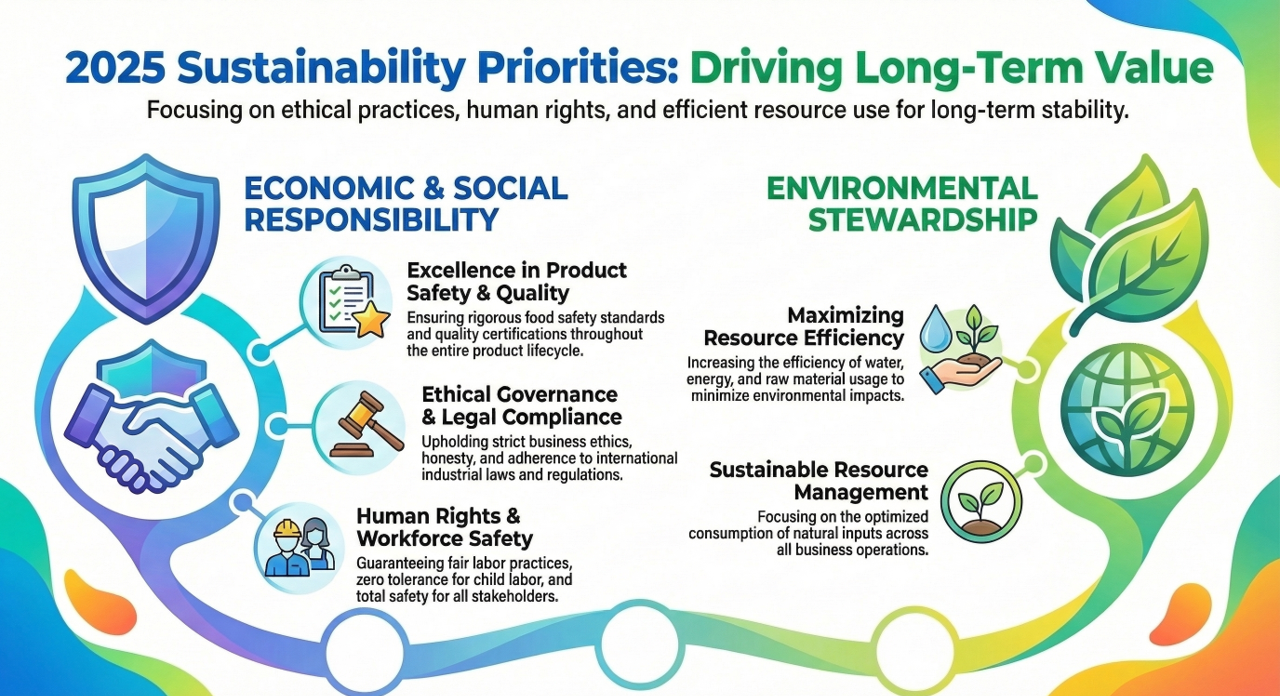
In 2025, the Company identified and prioritized the following sustainability material topics that significantly impact both our business operations and our stakeholders:
Economic
Product Quality and Food Safety: Ensuring excellence and safety standards throughout the product lifecycle.
Fair Business Practices: Upholding ethical conduct and integrity in all business dealings.
Legal and Regulatory Compliance: Adhering strictly to applicable laws, industry regulations, and international standards.
Social
Labor Practices and Human Rights: Ensuring fair treatment of labor and the protection of human rights, including strict zero-tolerance policies for child labor.
Occupational Health and Safety: Safeguarding the well-being of employees, consumers, business partners, and local communities.
Environmental
Efficient Resource Management: Optimizing the consumption of natural resources, including water, energy, and raw materials, to minimize environmental impact.
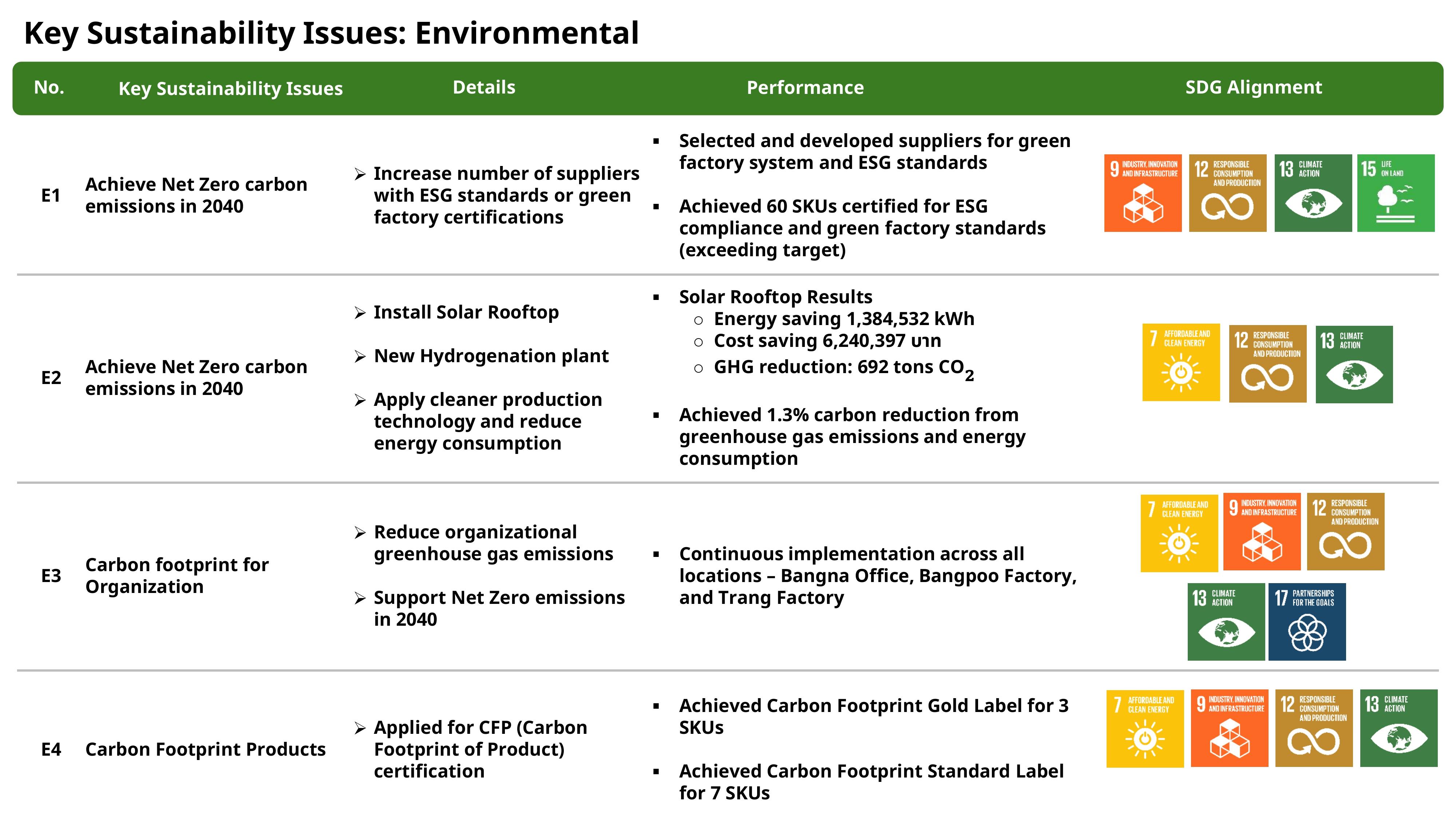
Management Approach for Material Sustainability Topics
In 2025, the Company implemented a series of Sustainable Development (SD) Activities specifically designed to address our identified material topics. These initiatives demonstrate our commitment to integrating sustainability into our core business operations, with key details as follows:
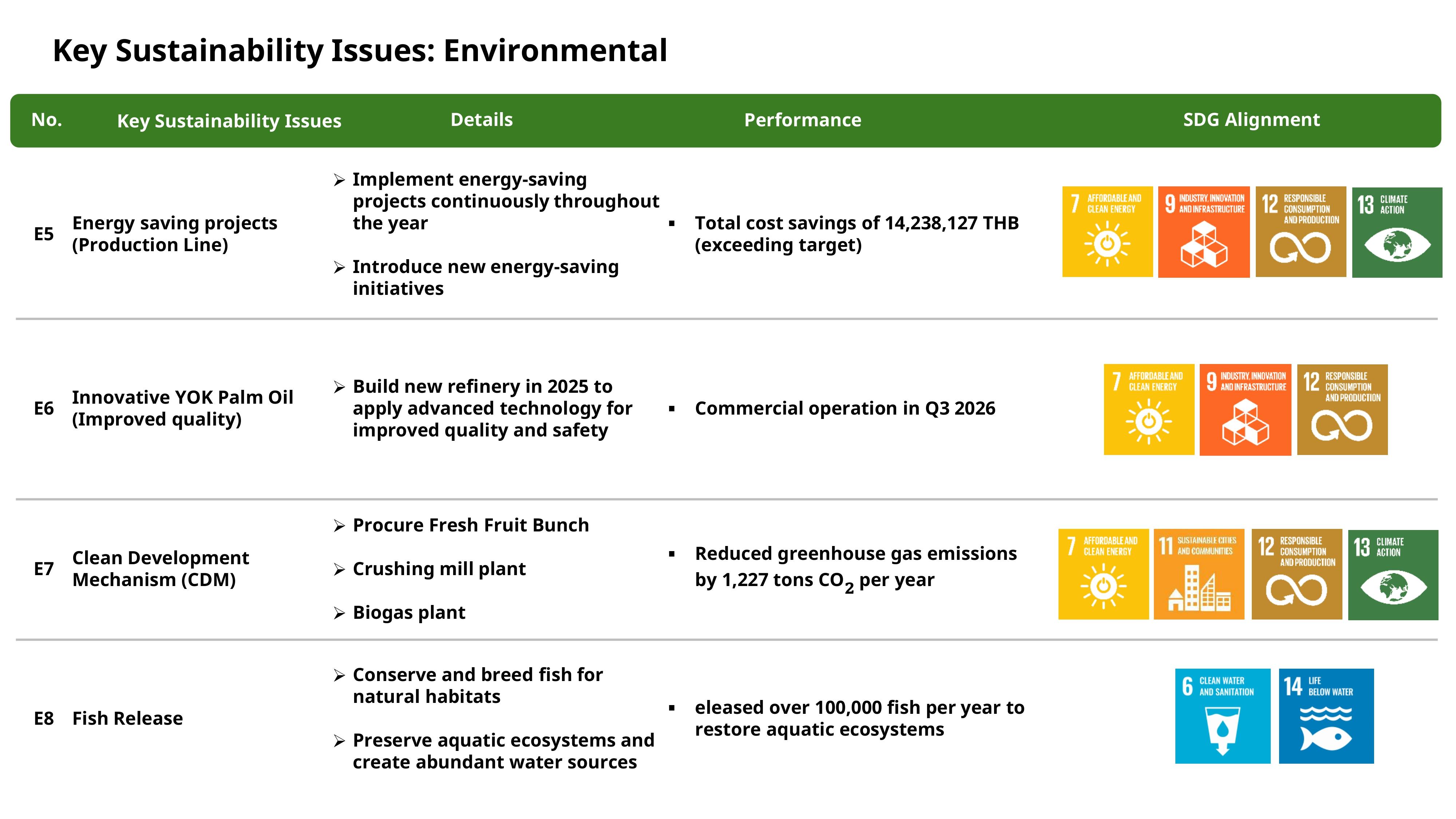
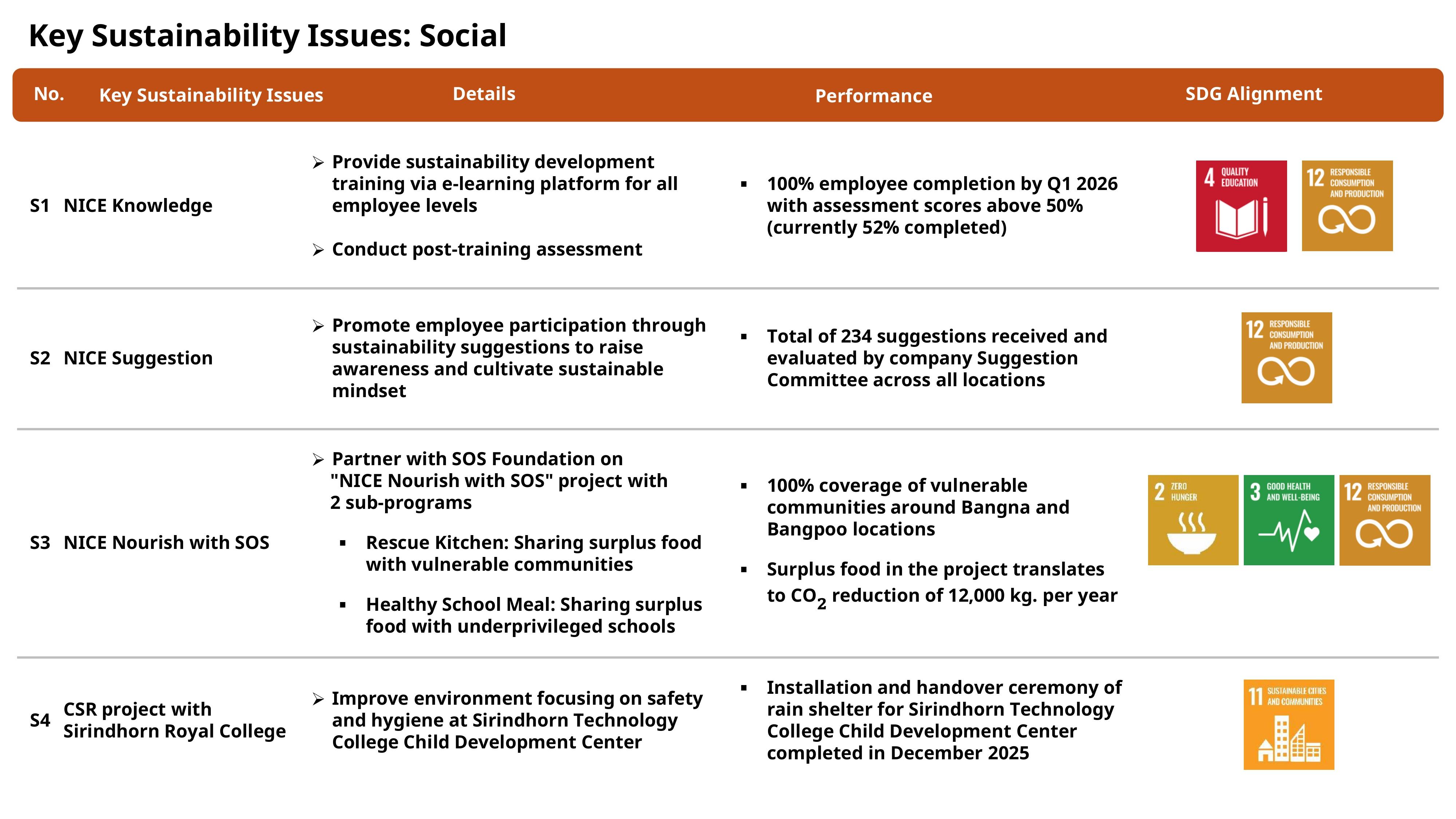
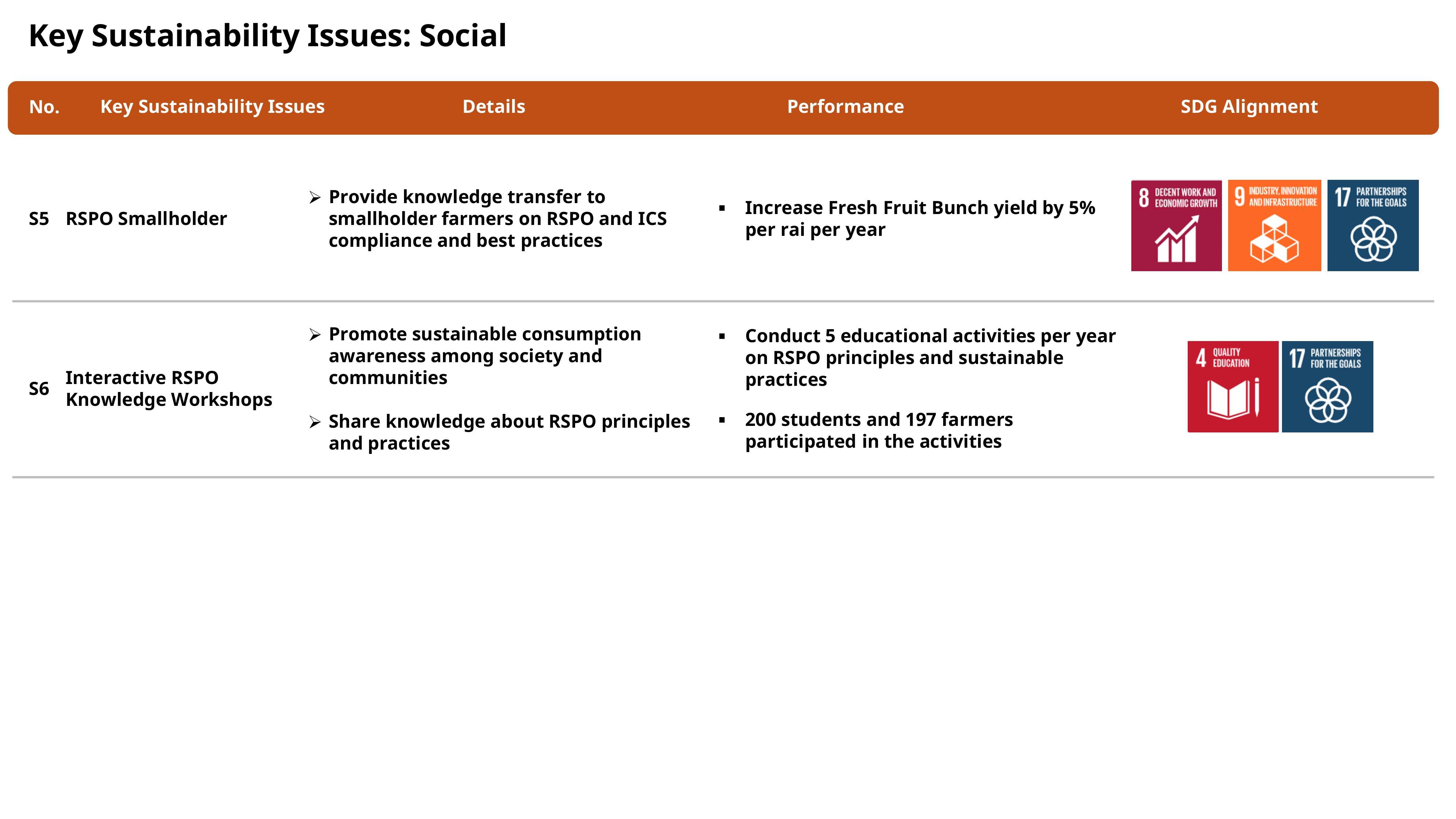
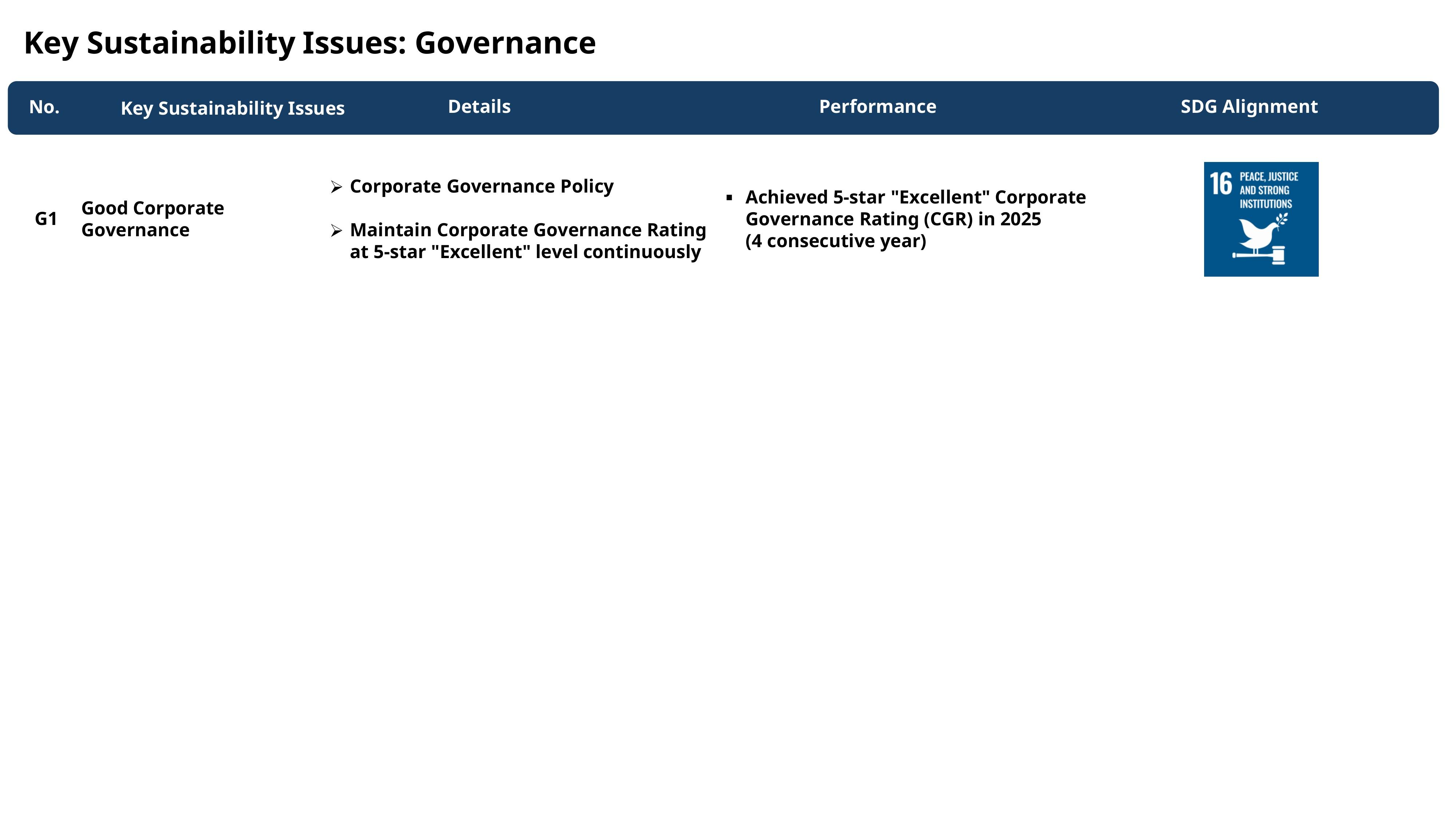
Stakeholder Analysis
| Stakeholder Type | Stakeholders | Stakeholder Expectations | Communication Activities |
|---|---|---|---|
| External stakeholders | 2902 · Description: Community · 2911 · Description: Raw material distributors · 2918 · Description: Contractors · 2923 · Description: Customers · 2931 · Description: Government agencies and Regulators · 2933 · Description: Non-profit organization / NGOs | Customers
- Deliver goods on time
- The products are of good quality and are safe.
- Want products at cheap prices
- Business is not slowing down or interrupted due to the current pandemic / war / economic situation.
- Suppliers have awareness/manufacturing processes that reduce their impact on climate change.
Local administrative organizations and communities
- Activity Support Fund
- Not create pollution for the community
Nearby factories
- Factory does not cause any environmental pollution.
- The factory can control emergencies.
Supplier
- Pay in full and on time
- Customers are not affected by the current epidemic / war / economic situation.
Government agencies
- Comply with the law
- Cooperation in preventing epidemics
NGOs
- Environmental impact
Contractor
- Pay in full and on time
- Customers are not affected by the epidemic.
| 2940 · Description: Social Event · 2941 · Description: Online Communication · 2942 · Description: Internal Meeting · 2944 · Description: Annual General Meeting (AGM) · 2945 · Description: Complaint Reception · 2947 · Description: Satisfaction Survey |
| Internal stakeholders | 2913 · Description: Shareholders · 2921 · Description: Employees | Employee
-Good working environment
-No occupational diseases
-Progress and stability in your career
-Have consistent and fair income
-Participate in safety activities
-Good welfare
-No factory closures or layoffs due to the current pandemic/economic situation
-Promote and encourage participation in cooperation in compliance with company policies or laws to reduce climate change.
-Have knowledge and understanding of climate change and be able to work in an environmentally friendly manner.
Shareholders
- Receive good dividends every year
- Business is not slowing down or disrupted by the current pandemic / war / economic situation.
| 2940 · Description: Social Event · 2941 · Description: Online Communication · 2942 · Description: Internal Meeting · 2944 · Description: Annual General Meeting (AGM) · 2945 · Description: Complaint Reception · 2946 · Description: Employee Engagement Survey · 2947 · Description: Satisfaction Survey · 2948 · Description: Training / Seminar |
Environmental Policy & Guidelines
Has an Environmental Policy
Yes
Policy Description
3.3.1 Environmental policy and guidelines
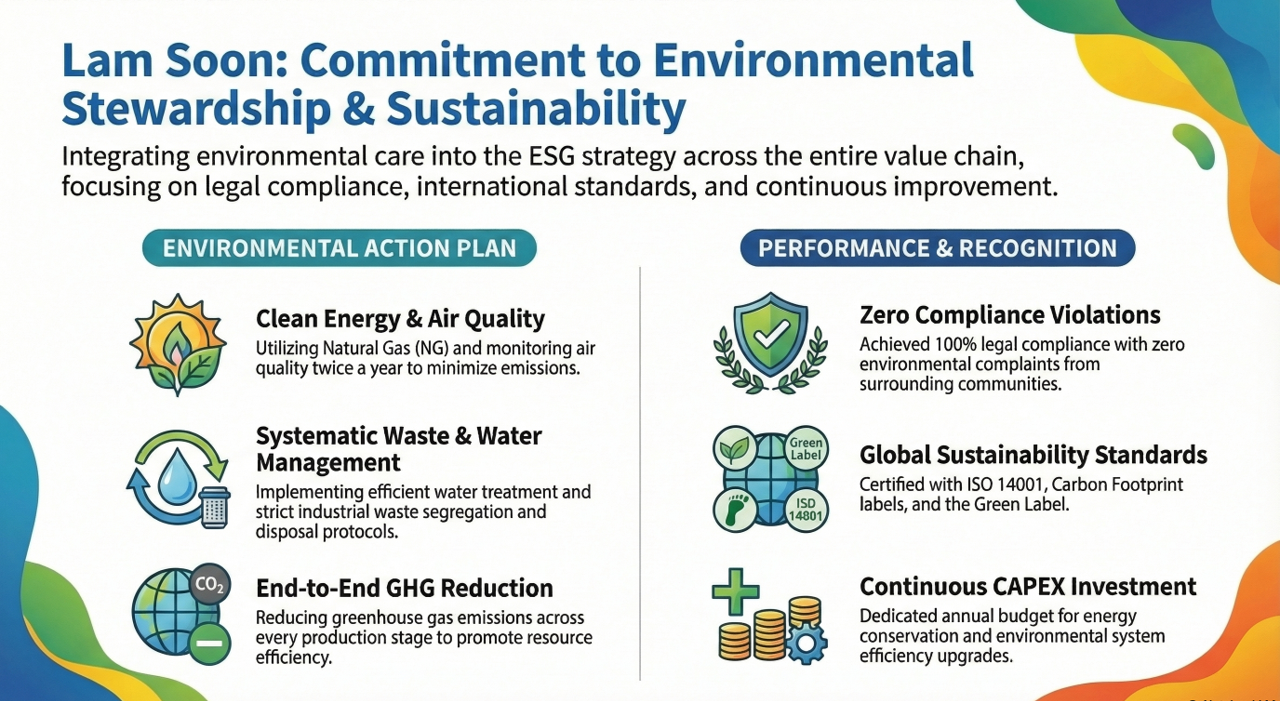
Lam Soon (Thailand) Public Company Limited places strong emphasis on responsible environmental management to prevent and mitigate impacts arising from its operations on communities, natural resources, and surrounding ecosystems. Environmental stewardship is integrated into the Company’s sustainability strategy in line with ESG principles, covering operations across the entire value chain from upstream to downstream.
The Company has established environmental policies and implemented them throughout all operational processes. The Company has been certified under the ISO 14001 Environmental Management System and strictly complies with applicable environmental laws and regulations, with regular monitoring and reporting of environmental performance to relevant government authorities.
The Company’s environmental management covers key areas including water pollution, air emissions, and the management of waste and hazardous waste. Continuous control, monitoring, and performance tracking are implemented to ensure emissions remain within legal standards and do not cause adverse impacts on surrounding communities or the environment.
Environmental Operational Guidelines
Air Quality Management: We conduct stack emission monitoring from boilers twice annually to ensure air quality standards. Furthermore, we prioritize clean energy, such as Natural Gas (NG), to minimize air pollutants and environmental footprints.
Water Management: Our efficient wastewater treatment systems ensure all discharges meet regulatory standards. Performance data is consistently reported to relevant government authorities as required by law.
Waste and Hazardous Waste Management: We implement strict waste segregation and provide specialized storage areas for different waste types. All transport and disposal activities are managed by authorized providers, with industrial waste data formally reported via the Sor.Gor. 1 system.
GHG Emissions & Resource Efficiency: We execute greenhouse gas reduction measures across the entire value chain—from upstream to downstream—while promoting the most efficient use of resources.
Sustainability Investment: Annual Capital Expenditure (CAPEX) is allocated specifically for energy conservation and environmental projects to continuously upgrade and enhance our environmental management systems.
Environmental Performance
Standard Excellence: Maintained continuous certification for ISO 14001 (Environmental Management System), reflecting our commitment to international standards.
Climate & Green Recognition: Successfully achieved Carbon Footprint for Organization (CFO) and Carbon Footprint of Product (CFP) certifications, alongside the Green Label for environmentally friendly products.
Regulatory Compliance: 100% completion of environmental monitoring and reporting to government authorities as required by law.
Zero Incidents: Recorded zero environmental legal violations and zero community complaints within the reporting period.
Strategic Investment & Efficiency: Consistently executed energy and environmental improvement projects under the CAPEX plan, focusing on resource reduction, emission mitigation, and process efficiency to meet our long-term sustainability goals.
Policy Document Link
https://lamsoon.co.th/wp-content/uploads/Environmental-Policy.pdf
Page Number in Report
1
Environmental Guidelines
| Guideline |
|---|
| Electricity Management |
| Fuel Management |
| Renewable/Clean Energy Management |
| Water Management |
| Waste Management |
| Biodiversity Management |
| Greenhouse Gas and Climate Change Management |
| Air Quality Management |
| Noise Pollution Management |
Environmental Policy Review
Policy Reviewed This Year
Yes
Review Details
Environmental Highlights in 2025
1. Project Electrostatic Precipitator (ESP)
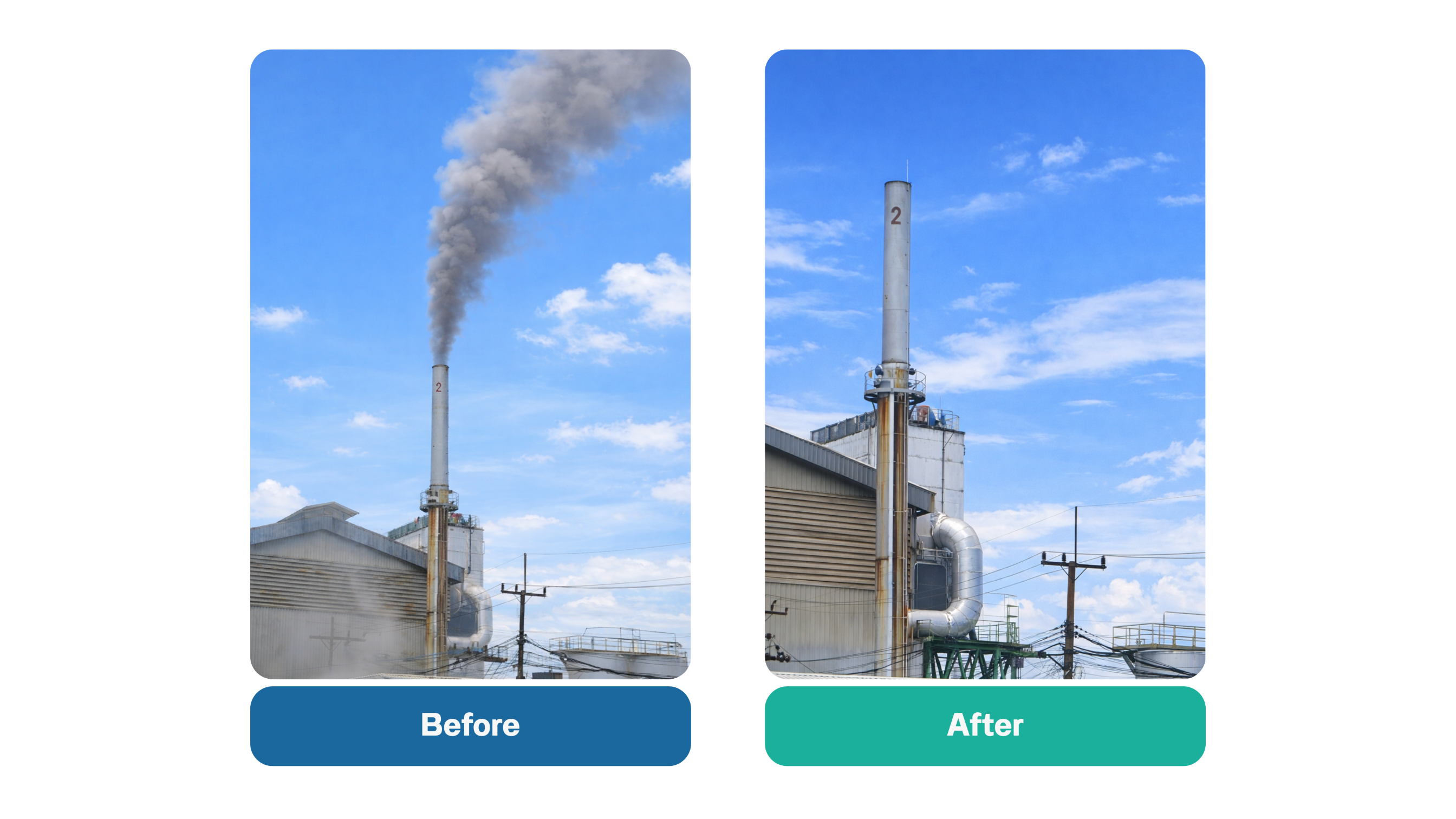
Trang Crushing Mill has successfully completed the installation of an Electrostatic Precipitator (ESP) system, a project spanning from July 2024 to October 2025. This innovative Clean Technology utilizes high-efficiency electrostatic charges to capture over 99% of particulate matter. By significantly reducing air emissions and fostering a healthier environment for the surrounding community, this initiative directly aligns with the Ministry of Industry’s Green Industry policy. This investment underscores our commitment to operational excellence and proactive environmental stewardship.
Project Outcomes: Installation of the Electrostatic Precipitator (ESP)
The installation of the ESP delivers significant environmental value across multiple dimensions:
Air Pollution Reduction
Outcome/Value:
Improves air quality by reducing particulate emissions, including PM2.5 and soot, contributing to a cleaner and safer atmosphere.
Employee and Community Health Enhancement
Outcome/Value:
Contributes to the mitigation of respiratory illnesses and pollution-related health issues among employees and surrounding communities.
Green Corporate Image
Outcome/Value:
Demonstrates the Company’s environmental responsibility and aligns with its ESG principles, reinforcing a positive and sustainable corporate reputation.
Long Term Environmental Impact Reduction
Outcome/Value:
Reduces the long term accumulation of particulate matter within ecosystems—air, soil, and water—supporting sustainable environmental protection.
2. Continuous Emission Monitoring System (CEMS) Installation Project
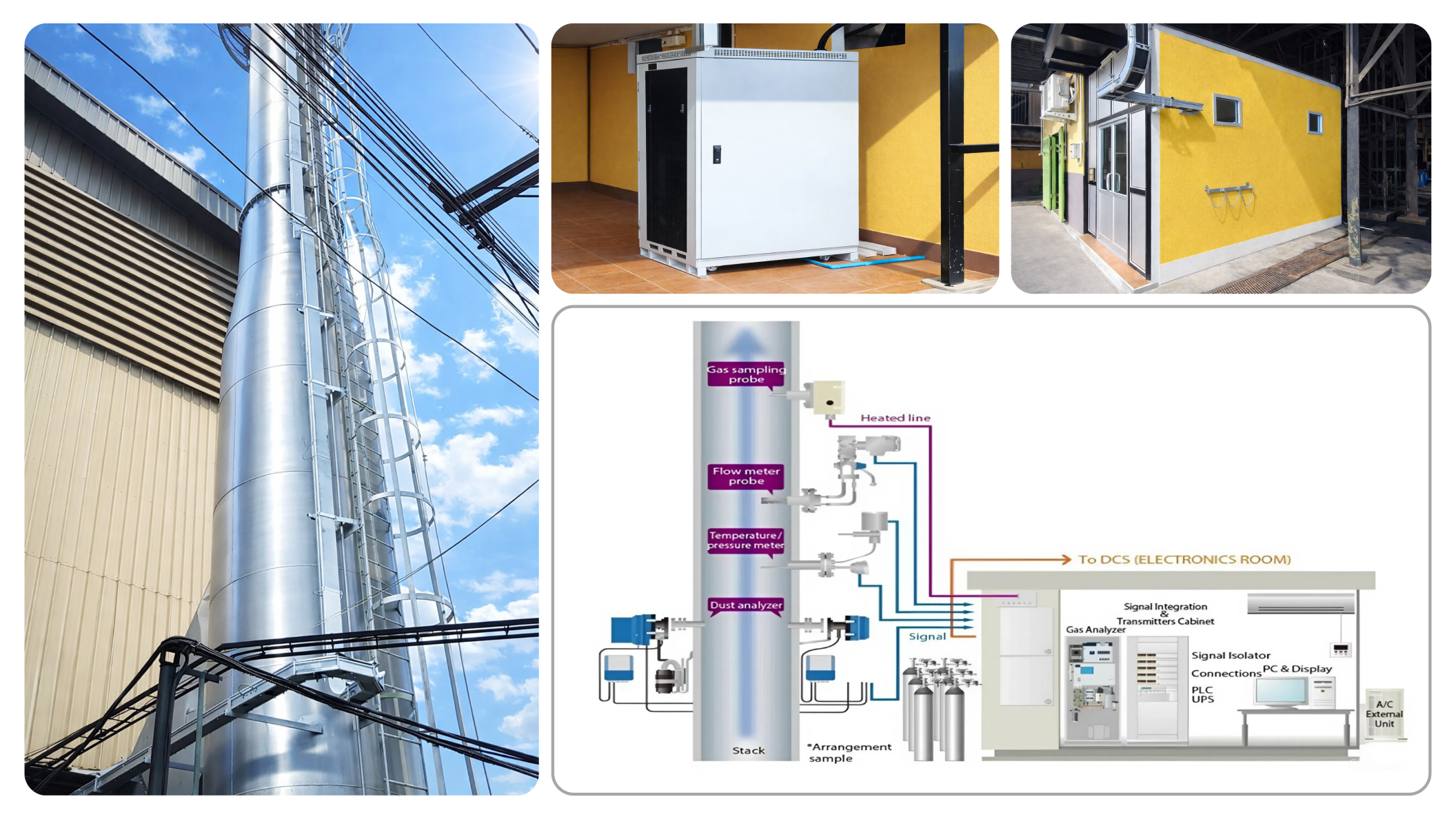
Trang Crushing Mill branch installed the CEMS system in July 2024 and completed the installation in September 2025. The CEMS system is a technology installed on the factory’s emission stack to measure and record data such as particulate matter, sulfur dioxide, carbon monoxide, and other gases. This data is transmitted in real time to the factory’s central system as well as to government authorities. The system provides high accuracy without the need for sample collection and can continuously monitor emissions 24 hours a day using advanced sensor technology for data analysis. It supports proactive environmental management. The CEMS system also issues automatic alerts when pollutant levels exceed standard limits, allowing operators to make immediate adjustments.
Project Outcomes: Installation of the Continuous Emission Monitoring System (CEMS)
Emission Control Efficiency
Outcome/Value:
With continuous emissions data, the factory is able to effectively control its production processes, ensuring that emissions released into the atmosphere are accurately managed and compliant with regulatory standards.
Transparency and Community Trust
Outcome/Value:
Real-time reporting of emissions data to government authorities and the public enhances transparency and helps reduce potential conflicts between the factory and surrounding communities.
Support for Sustainable Development
Outcome/Value:
The initiative promotes efficient resource utilization and contributes to the Company’s transition toward a low-carbon industry. It also reinforces the Company’s ESG commitments and supports long-term sustainable business operations.
Policies & Guidelines Changed
| Change |
|---|
| Electricity Management |
| Renewable/Clean Energy Management |
| Waste Management |
| Greenhouse Gas and Climate Change Management |
| Air Quality Management |
Energy — Plan & Guidelines
Has an Energy Management Plan
Yes
Plan Description
The Company recognizes the importance of effective energy management, as energy is a key factor in the palm oil refining process that directly affects production costs, operational efficiency, and environmental impacts. Accordingly, the Company has implemented systematic energy conservation programs in compliance with the Energy Conservation Promotion Act, the RSPO guidelines, and the Company’s environmental policy, to support sustainable business operations.
In its operations, the Company has adopted energy-efficient technologies and innovations within the production process, including the installation of inverter systems, improvements to compressed air systems, and the use of high-efficiency chillers. In addition, the Company promotes the use of renewable energy by converting wastewater generated from the palm oil production process into biogas for electricity generation, thereby reducing reliance on fossil fuels and greenhouse gas emissions.
In 2025, the Company generated and sold 2,434,920 kilowatt-hours (kWh) of electricity from biogas to the Provincial Electricity Authority (PEA). This initiative not only creates added value from production waste but also supports circular resource utilization. The Company also manages greenhouse gas emissions through biogas production projects registered with the Thailand Greenhouse Gas Management Organization and the development of carbon credits under international standards, including the Clean Development Mechanism (CDM) and the Gold Standard.
Furthermore, the Company has continuously upgraded its sustainable palm oil production certification to RSPO Module: Identity Preserved (IP), reflecting its commitment to responsible energy and resource management throughout the supply chain, and to creating long-term sustainable value for the environment, communities, and all stakeholders.
Energy Management Framework
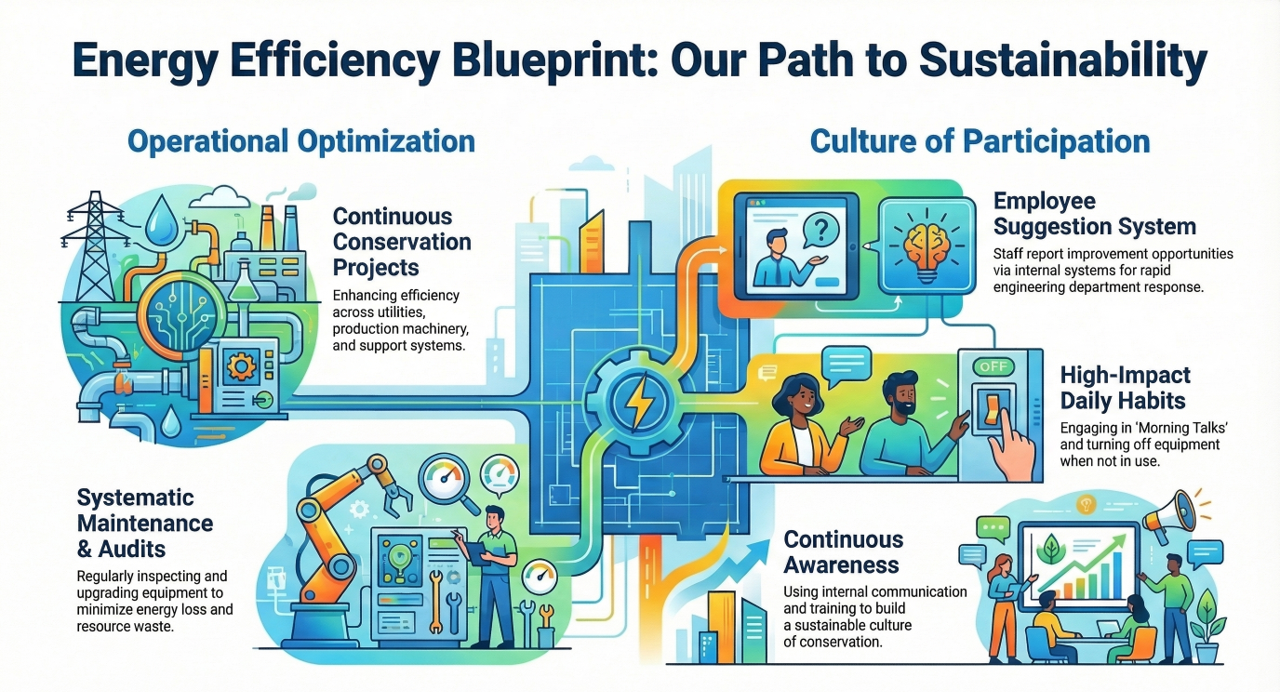
The Company places strong emphasis on efficient energy utilization throughout the entire production value chain—from machinery control and energy system maintenance to process improvements—to ensure optimal resource use and minimize energy losses. The key operational approaches are as follows:
1. Implementation of Energy Conservation Projects
The Company consistently implements energy conservation projects to enhance energy efficiency across all factory operations, encompassing utilities, production machinery, and operational support systems. We conduct regular audits, maintenance, and efficiency upgrades of our equipment and energy systems to minimize energy loss and maximize resource utilization throughout the facility.
2. Energy and Environmental Feedback Mechanism
The Company actively encourages employees at all levels to participate in energy and environmental management. We have established an internal reporting system that empowers staff to identify and report deficiencies or opportunities for improvement directly to the Engineering Department. This enables prompt inspections, corrective actions, and appropriate technical upgrades.
This systematic feedback loop ensures a rapid response to issues, minimizes energy waste, and mitigates environmental risks, while fostering a corporate culture of continuous improvement and collective responsibility toward operational efficiency.
3. Employee Training and Awareness Building
Recognizing that employees are fundamental drivers of energy efficiency, the Company consistently promotes energy conservation awareness through various internal communication channels. These initiatives include energy-saving campaigns, onboard training for new staff, Morning Talk sessions, and feedback activities. Furthermore, we provide practical guidance on optimal energy behaviors, such as switching off electrical equipment when not in use and selecting energy-efficient appliances.
These continuous efforts instill a corporate culture of resource optimization and empower employees to actively participate in reducing energy consumption and mitigating environmental impacts for long-term sustainability.
Energy Management Performance and Outcomes
In 2025, the Company implemented 25 additional energy conservation projects aimed at enhancing energy efficiency throughout the production process. These initiatives involved the integration of modern innovations and technologies alongside continuous efforts to foster energy-saving awareness among employees. By empowering our workforce to utilize energy responsibly, we have successfully cultivated a robust corporate culture of conservation, ensuring that energy efficiency remains a sustainable practice across the organization.
Recognizing the importance of systematic energy management, the Company has set a target to reduce total energy intensity (including electricity, steam, and natural gas) by at least 2% annually. This objective is driven by a comprehensive energy conservation roadmap integrated throughout all factory processes. By continuously optimizing energy efficiency, we aim to reduce production costs and minimize our environmental footprint.
Energy — Electricity Consumption
Electricity Consumption
| Metric | Current Year | Previous Year | Two Years Ago |
|---|---|---|---|
| Total electricity consumption within the organization (Kilowatt-Hours) | 16,741,643 | 17,684,025.18 | 16,451,588.88 |
| Electricity purchased for consumption from non-renewable energy sources (Kilowatt-Hours) | 16,656,846 | 17,638,003.9 | 16,432,564 |
| Electricity purchased or generated for consumption from renewable energy sources (Kilowatt-Hours) | 84,797 | 46,021.28 | 19,024.88 |
Energy — Fuel Consumption
Fuel Consumption
| Metric | Current Year | Previous Year | Two Years Ago |
|---|---|---|---|
| Crude oil (Barrels) | 0 | 0 | 0 |
| Coal (Metric tonnes) | 0 | 0 | 0 |
| Jet fuel (Litres) | 0 | 0 | 0 |
| Diesel (Litres) | 216,625.58 | 203,375.03 | 182,026.65 |
| Gasoline (Litres) | 123,817.22 | 118,546.56 | 99,407.21 |
| Fuel oil (Litres) | 0 | 0 | 1,500 |
| Natural gas (Standard cubic feet) | 44,506.59 | 44,574.01 | 44,462.89 |
| LPG (Kilograms) | 60,765 | 27,260 | 525 |
| Steam (Metric tonnes) | 74,321 | 68,533.5 | 133,194.5 |
Energy — Targets
Has Set Targets
Yes
Targets
| Target | Base Year | Base Year Value | Target Year | Target Year Value | Unit | Per Unit (Intensity) | Per Unit — Please Specify |
|---|---|---|---|---|---|---|---|
| Reduction of electricity purchased and fuel consumption | 2,025 | 542 | 2,026 | 540 | Mega Joules | Metric ton of product | Metric ton of product |
Energy — Performance & Outcomes
Has Performance Results
Yes
Performance Description
Key Energy Conservation Projects in 2025
1. Solar Rooftop Installation Project at Bangpoo Plant
The Company recognizes the importance of minimizing environmental impacts arising from its operations and promoting the use of renewable energy as part of its commitment to sustainable business practices. In the past year, the Company implemented a solar power generation project (Solar Rooftop) at its Bangpoo manufacturing plant by utilizing rooftop areas for the installation of photovoltaic panels to enhance energy efficiency and reduce reliance on electricity from external sources.
The solar rooftop system was designed to operate during daytime hours, aligning with periods of peak electricity demand at the plant. This approach enhances internal energy management efficiency, reduces dependence on fossil fuel–based energy, and contributes to long-term energy cost optimization.
Through the implementation of this project, the Company is able to generate approximately 1,358,043.05 kilowatt-hours of electricity per year from renewable energy sources. In addition, the project contributes to a reduction of greenhouse gas emissions by approximately 687.96 tons of carbon dioxide equivalent per year (tCO2e/year), which is equivalent to the conservation or absorption capacity of approximately 940 trees per year.
This initiative reflects the Company’s commitment to operating in accordance with ESG principles, particularly in the environmental dimension, by integrating clean energy technologies into its production processes. The project supports the Company’s long-term strategy to mitigate climate-related risks, reduce greenhouse gas emissions, and create sustainable value for shareholders and all stakeholders.
2. Construction of the 240 TPD Hydrogenation Plant
The Company has implemented a Hydrogenation building construction project with a production capacity of 240 tons per day (TPD) to support the hydrogenation production process. This technology enhances the stability of vegetable oils, reduces oxidation, and extends product shelf life. The production process is designed to ensure consistent quality control while reducing energy consumption and minimizing waste generation.
The Hydrogenation facility is designed in accordance with energy-efficient and environmentally friendly principles, including the installation of automated ventilation systems and the use of high-performance thermal insulation materials, thereby enhancing operational safety and efficiency.
The project is carried out in compliance with international occupational health, safety, and environmental management standards, including ISO 45001 and ISO 14001. This reflects the Company’s commitment to conducting business in line with ESG principles and advancing toward a Green Industry, strengthening competitiveness and supporting long-term sustainable growth.
3. Construction of the 500 TPD Refinery Plant
The Company places strong emphasis on continuous innovation in its production processes. The Company is currently implementing a Refinery construction project with a production capacity of 500 tons per day (TPD) to support capacity expansion and enhance product quality. The project integrates advanced production technologies and intelligent control systems throughout the palm oil refining process.
The project adopts Ice Condensing Vacuum System (ICS) technology, which enhances deodorization efficiency under lower operating temperatures, shortens processing time, and helps maintain high product quality with low trans fatty acid content. In addition, the technology significantly reduces energy and water consumption, as well as wastewater generation from the production process.
Furthermore, the project focuses on energy- and resource-efficient system design, including the installation of heat recovery systems to reuse energy within the process and the implementation of energy-efficient building designs. These initiatives contribute to lower unit production costs while minimizing environmental impacts.
The construction and operation of the project are conducted in compliance with international occupational health, safety, and environmental management standards, including ISO 45001 and ISO 14001. This reflects the Company’s commitment to conducting business in accordance with the ESG framework and advancing toward a Green Industry, thereby enhancing competitiveness and supporting long-term sustainable growth.
4.Project Drum Packing Line
The Company is committed to continuously advancing innovation and enhancing production efficiency. During the reporting period, the Company implemented an improvement project for its Drum Packing Line, upgrading the process from a manual system to a semi-automated system to enhance accuracy, speed, and consistency in the filling process, while reducing product losses and improving resource utilization efficiency.
The project involved the installation of digital weighing equipment and automated filling control systems, which helped minimize weighing deviations, enhance workplace safety, reduce reliance on manual labor in higher-risk operations, and support overall operational efficiency.
In parallel, the Company restructured its production lines into a closed system in compliance with Good Hygiene Practices (GHP) and Hazard Analysis and Critical Control Points (HACCP) standards to strengthen product quality and food safety throughout the production process. In addition, the Company implemented energy- and resource-efficient production practices, along with systematic waste management and pollution control measures, resulting in more stable, efficient, and environmentally responsible operations.
These initiatives reflect the Company’s commitment to conducting business in accordance with ESG principles, strengthening customer confidence in product quality and safety, while creating long-term sustainable value for all stakeholders.
5. Pilot Project: Electric Vehicle (EV) Integration in Logistics
In 2025, the Company implemented a pilot project to deploy one NEX BEV Cargo electric truck for internal packaging transportation within the plant. The initiative supports the Company’s sustainability strategy by reducing reliance on fossil fuel–based energy and lowering greenhouse gas emissions in line with the ESG framework, while also contributing to the reduction of air pollution and noise levels in the operating areas.
In 2026, the Company plans to systematically monitor and analyze key operational data, including energy consumption, driving range per charge, operating costs, and environmental impacts, in order to evaluate performance and cost-effectiveness compared with conventional diesel trucks.
Preliminary assessment results indicate that electric trucks have significant potential to reduce carbon dioxide (CO2) emissions from internal logistics activities. The findings will be used to inform policy decisions and guide the future expansion of electric vehicle adoption, supporting the Company’s long-term greenhouse gas reduction targets and sustainable business operations.
6. Electrical Energy Efficiency Initiatives
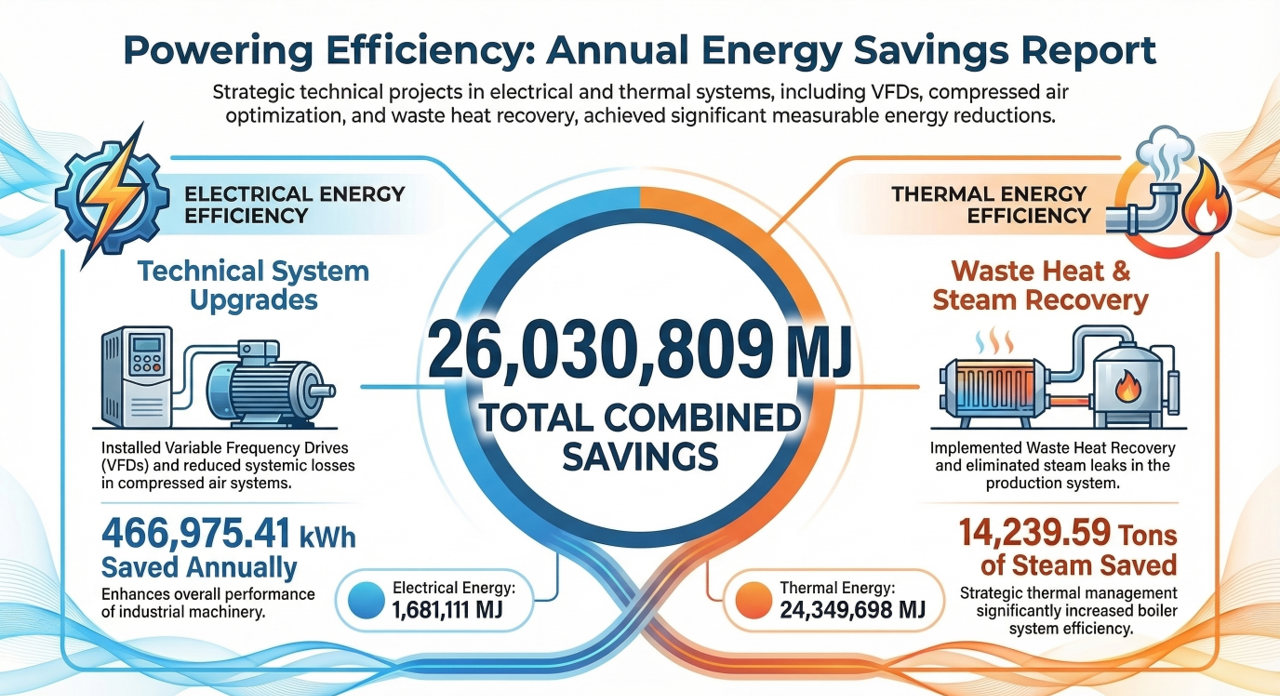
The Company has implemented specialized technical projects to optimize electricity consumption, including the installation of Variable Frequency Drives (Inverters) for motor control and the comprehensive mitigation of energy loss within compressed air systems. These initiatives have led to a significant reduction in power waste and enhanced the overall performance of our machinery.
Energy Savings Performance:
Annual Electricity Savings: 466,975.41 kWh per year
Total Energy Equivalent: 1,681,111 MJ per year
7. Thermal Energy Efficiency Initiatives
The Company has prioritized thermal energy optimization through key projects, such as waste heat recovery and the reduction of steam leaks within the production system. These efforts have significantly lowered our thermal energy footprint and improved boiler system efficiency.
Thermal Energy Savings Performance:
Annual Steam Reduction: 14,239.59 tons steam per year
Total Thermal Energy Equivalent: 24,349,698 MJ per year
Through the successful implementation of both electrical and thermal energy conservation initiatives, the Company achieved a combined energy saving of 26,030,809 MJ per year.
Water — Plan & Guidelines
Has a Water Management Plan
Yes
Plan Description
The Company prioritizes responsible water and wastewater management across its entire production value chain. We are committed to optimizing water efficiency, minimizing our impact on natural water resources, and ensuring that all wastewater undergoes rigorous treatment in full compliance with relevant laws and environmental standards before being discharged back into the environment.
Furthermore, the Company maintains rigorous oversight and monitoring of wastewater quality, strictly adhering to the principles of Good Corporate Governance and the regulations of the Bangpoo Industrial Estate. We meticulously measure and monitor key water quality parameters before discharging effluent into the industrial estate’s central treatment system. This proactive approach ensures the prevention of any adverse impacts on the environment and surrounding communities. Our detailed management measures are as follows:
Temperature Control: We strictly monitor and control wastewater temperature to prevent issues related to Grease & Oil separation and to preserve the biological and chemical efficiency of the wastewater treatment system.
pH Levels (Acidity-Alkalinity): Wastewater pH levels are meticulously measured prior to discharge to ensure full compliance with the strict effluent standards and regulations set by the Industrial Estate Authority of Thailand (IEAT).
Total Dissolved Solids (TDS): This parameter is used to evaluate the concentration of dissolved minerals and salts in the wastewater. High TDS levels can lead to scale formation within pipelines, machinery, and treatment basins, potentially compromising operational longevity and efficiency.
Chemical Oxygen Demand (COD): This serves as a key indicator of the "organic load" or pollution level in the wastewater. High COD concentrations can lead to unpleasant odors and cause oxygen depletion in receiving water bodies, which negatively impacts aquatic ecosystems. Monitoring this parameter ensures that our discharge does not disrupt the local environment.
Grease & Oil: This parameter measures the concentration of fatty substances and lipids dissolved in the wastewater. Excessive levels of Grease & Oil can lead to foul odors and the accumulation of stubborn fat deposits within the drainage and sewage infrastructure, potentially causing blockages and system inefficiencies.
Total Suspended Solids (TSS/SS): This parameter is a key indicator of water turbidity (cloudiness). High levels of suspended solids can lead to sedimentation and sludge accumulation, which may obstruct water flow and significantly diminish the operational efficiency of the wastewater treatment system.
Benefits and Strategic Importance to the Company
Regulatory Compliance: Ensures that wastewater quality consistently adheres to the stringent requirements and standards set by the Bangpu Industrial Estate (IEAT).
Environmental & Social Risk Mitigation: Proactively prevents environmental risks and mitigates potential negative impacts on surrounding communities, fostering harmonious co-existence.
perational Cost Control: Reduces the risk of financial penalties and additional surcharges resulting from discharging effluent that exceeds permissible standards.
Corporate Governance & Sustainability: Demonstrates the Company’s commitment to Good Corporate Governance and reinforces our long-term sustainability goals through transparent and responsible operations.
Water — Withdrawal, Discharge & Consumption
Water Withdrawal, Discharge & Consumption
| Metric | Current Year | Previous Year | Two Years Ago |
|---|---|---|---|
| Total water withdrawal (Cubic meters) | 492,423 | 442,604.6 | 258,319.65 |
| Total water withdrawal by third-party water (Cubic meters) | 325,585 | 289,681 | 164,997 |
| Total water withdrawal by surface water (Cubic meters) | 0 | 0 | 0 |
| Total water withdrawal by groundwater (Cubic meters) | 0 | 0 | 0 |
| Total water withdrawal by seawater (Cubic meters) | 0 | 0 | 0 |
| Total water withdrawal by produced water (Cubic meters) | 166,838 | 152,923.6 | 93,322.65 |
| Percentage of wastewater treated before discharge (%) | 100 | 100 | 100 |
| Total water discharge (Cubic meters) | 91,960 | 91,993.6 | 94,620 |
| Total water discharge to third-party water (Cubic meters) | 91,960 | 91,993.6 | 94,620 |
| Total water discharge to surface water (Cubic meters) | 0 | 0 | 0 |
| Total water discharge to groundwater (Cubic meters) | 0 | 0 | 0 |
| Total water discharge to seawater (Cubic meters) | 0 | 0 | 0 |
| Total water consumption (Cubic meters) | 400,463 | 350,611 | 163,699.65 |
| Recycled water (Cubic meters) | 0 | 0 | 0 |
Water — Targets
Has Set Targets
Yes
Targets
| Target | Base Year | Base Year Value | Target Year | Target Year Value | Unit | Per Unit (Intensity) | Per Unit — Please Specify |
|---|---|---|---|---|---|---|---|
| Reduction of water withdrawal | 2,025 | 0.32 | 2,026 | 0.3 | Cubic meters | Metric ton of product | Metric ton of product |
Water — Performance & Outcomes
Has Performance Results
Yes
Performance Description
The Company plans to upgrade its wastewater treatment system to Membrane Bioreactor (MBR) technology to enhance the consistency and quality of treated effluent in compliance with legal standards. The treatment capacity will be expanded from 10 to 20 cubic meters per hour to support production expansion, with completion expected by June 2026. This upgrade will help reduce the risk of system overflow, minimize environmental impacts, and increase opportunities for water reuse, thereby promoting more efficient water resource utilization.
In addition, the MBR system is expected to reduce the volume of sludge requiring disposal, lower long-term waste management costs, and support compliance with ESG frameworks and environmental regulations, thereby strengthening stakeholder confidence.
Trang Crushing Mill plans to construct a new raw water reservoir with a capacity of approximately 16,000 cubic meters to enhance water security and mitigate drought-related risks. The project is expected to be completed in 2026. The plant also utilizes surface water from public canals as its primary water source, accompanied by regular water quality monitoring to mitigate risks related to water pollution.
Bangpoo Refinery adopts a comprehensive water management approach covering water sourcing, consumption, reuse, and wastewater treatment, applying the 3R principles (Reduce, Reuse, Recycle). These practices enable the Company to consistently maintain effluent quality in compliance with the standards of the Bangpoo Industrial Estate, minimize impacts on surrounding communities and the environment, and ensure full and transparent reporting to relevant government authorities.
Waste — Plan & Guidelines
Has a Waste Management Plan
Yes
Plan Description
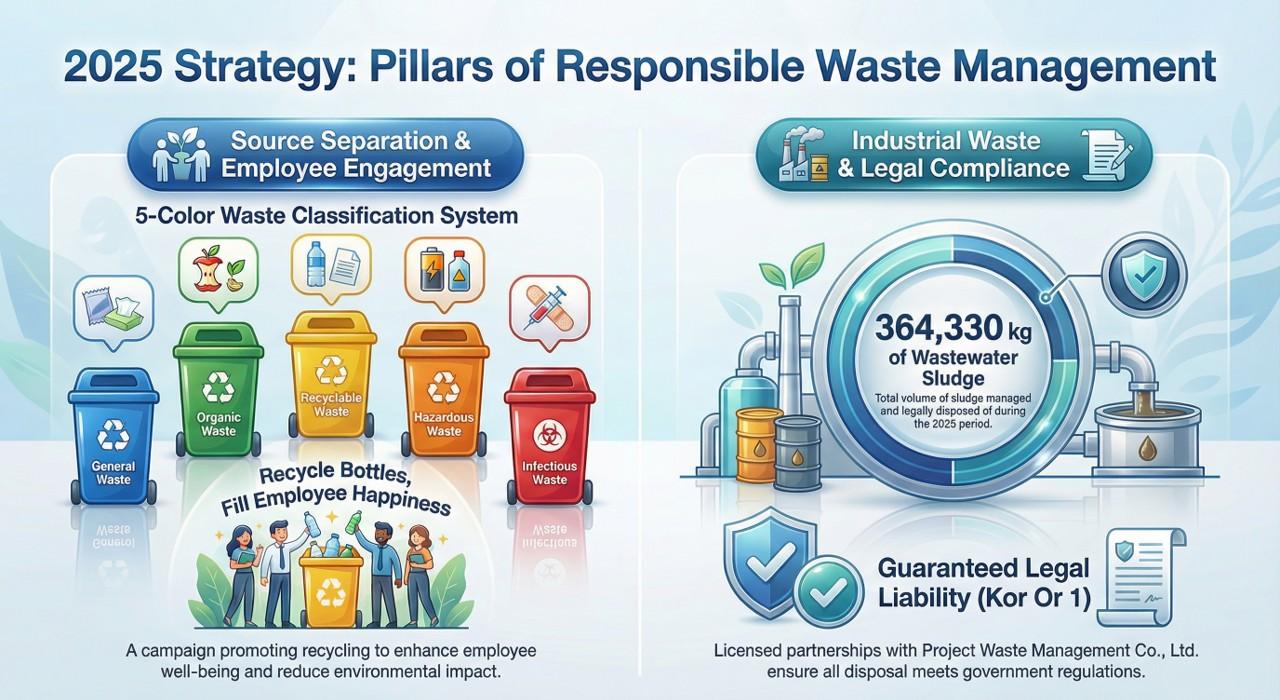
The Company prioritizes responsible waste and hazardous waste management by implementing source segregation through a standardized 5-color coding system for waste bins. This system categorizes waste into General Waste (Blue), Organic Waste (Green), Recyclable Waste (Yellow), Hazardous Waste (Orange), and Infectious Waste (Red). Furthermore, the Company provides dedicated storage areas for each category to ensure that all waste materials are subsequently processed for disposal or recycling in full compliance with legal requirements.
In 2025, the Company launched a waste segregation awareness campaign by clearly communicating designated waste sorting points throughout the operational areas. This initiative encouraged employees to properly segregate waste to be reintegrated into the recycling process under the project. "Recycle Bottles, Fueling Employee Happiness"
For hazardous waste and industrial waste, the Company implements strict segregation and utilizes dedicated storage areas. For instance, wastewater sludge is contained in specialized containers within designated storage zones and is subsequently managed through licensed disposal services. This process involves the official reporting of industrial waste via the Industrial Waste Liability Agreement (Kor.Or. 1) submitted to government authorities. In 2025, the Company generated a total of 364,330 kilograms of wastewater sludge, which was professionally managed and legally disposed of by Project Waste Management Co., Ltd., ensuring full compliance with environmental regulations.
Waste — Generation, Disposal & Recycling
Waste Generation, Disposal & Recycling
| Metric | Current Year | Previous Year | Two Years Ago |
|---|---|---|---|
| Total waste generated (Kilograms) | 494,100 | 556,090 | 199,520 |
| Non-hazardous waste (Kilograms) | 492,530 | 548,900 | 190,240 |
| Non-hazardous waste - Landfilling (Kilograms) | 487,840 | 548,900 | 190,240 |
| Non-hazardous waste - Incineration (with energy recovery) (Kilograms) | 0 | 0 | 0 |
| Non-hazardous waste - Incineration (without energy recovery) (Kilograms) | 4,690 | 0 | 0 |
| Non-hazardous waste - Other disposal operations (Kilograms) | 0 | 0 | 0 |
| Hazardous waste (Kilograms) | 1,570 | 7,190 | 9,280 |
| Hazardous waste - Landfilling (Kilograms) | 0 | 0 | 0 |
| Hazardous waste - Incineration (with energy recovery) (Kilograms) | 0 | 0 | 0 |
| Hazardous waste - Incineration (without energy recovery) (Kilograms) | 1,570 | 7,190 | 9,280 |
| Hazardous waste - Other disposal operations (Kilograms) | 0 | 0 | 0 |
| Total reused/recycled waste (Kilograms) | 264,673 | 5,606,524 | 4,786,611.48 |
| Reused/Recycled non-hazardous waste (Kilograms) | 264,673 | 5,598,768 | 4,777,415 |
| Reused non-hazardous waste (Kilograms) | 0 | 0 | 0 |
| Recycled non-hazardous waste (Kilograms) | 264,673 | 5,598,768 | 4,777,415 |
| Reused/Recycled hazardous waste (Kilograms) | 0 | 7,756 | 9,196.48 |
| Reused hazardous waste (Kilograms) | 0 | 0 | 0 |
| Recycled hazardous waste (Kilograms) | 0 | 7,756 | 9,196.48 |
Waste — Targets
Has Set Targets
Yes
Targets
| Waste Type | Disposal Approach | Target | Base Year | Base Year Value | Target Year | Target Year Value | Unit | Per Unit (Intensity) | Per Unit — Please Specify |
|---|---|---|---|---|---|---|---|---|---|
| Non-hazardous waste | 2760 · Description: Landfilling | Reduce waste volume | 2,025 | 0.68 | 2,026 | 0.65 | Kilograms | Metric ton of product | Metric ton of product |
Waste — Performance & Outcomes
Has Performance Results
Yes
Performance Description
In 2025, the Company launched a waste segregation awareness campaign by clearly communicating designated waste sorting points throughout the operational areas. This initiative encouraged employees to properly segregate waste to be reintegrated into the recycling process under the project. "Recycle Bottles, Fueling Employee Happiness"
GHG — Plan & Guidelines
Has a GHG Management Plan
Yes
Plan Description
The Company prioritizes the reduction of greenhouse gas emissions across its internal operations and throughout the entire value chain. We have integrated carbon management into our core environmental strategy, encompassing carbon footprint calculations, Green Label certifications, and the promotion of Climate Action goals. Furthermore, the Company has implemented Green Procurement policies to support sustainable climate impact mitigation.
The Company has appointed Socellar Co., Ltd. as its consultant for data collection and carbon footprint calculation. Additionally, Active Consultant (Thailand) Co., Ltd., an internationally recognized verification body, has been engaged as the third-party verifier. This partnership ensures the highest standards of data accuracy and the integrity of the assessment results.
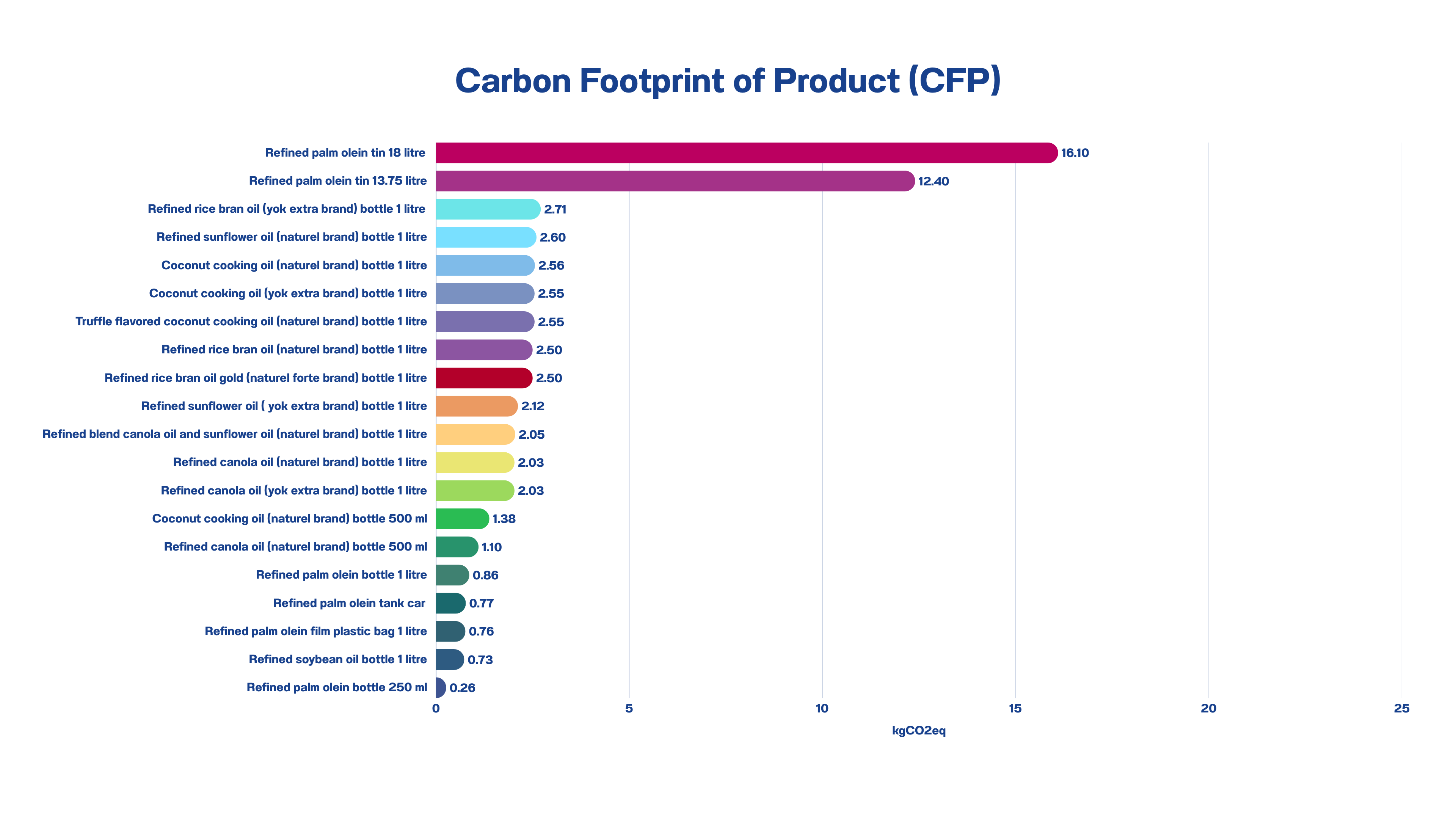
The Company has been officially certified for both Carbon Footprint for Organization (CFO) and Carbon Footprint of Products (CFP) by the Thailand Greenhouse Gas Management Organization (Public Organization) or TGO. A total of 20 products have received certification, as detailed below:
No. | Product Description | CFP Value |
1 | Refined palm olein from pericarp packed by pet bottle net content 250 ml | 255 gCO2eq |
2 | Refined palm olein from pericarp packed by pet bottle net content 1 litre | 859 gCO2eq |
3 | Refined palm olein from pericarp packed by film plastic bag net content 1 litre | 759 gCO2eq |
4 | 100% refined rice bran oil packed by pet bottle yok extra brand | 2.71 kgCO2eq |
5 | 100% refined sunflower oil packed by pet bottle yok extra brand | 2.12 kgCO2eq |
6 | Refined soybean oil net packed by pet bottle content 1 litre | 732 gCO2eq |
7 | Refined palm olein from pericarp packed by tin net content 13.75 litre | 12.4 kgCO2eq |
8 | Refined palm olein from pericarp packed by tin net content 18 litre | 16.1 kgCO2eq |
9 | Refined blend canola oil and sunflower oil ratio 4:1 packed by pet bottle net content 1 litre | 2.05 kgCO2eq |
10 | 100% refined canola oil (naturel brand) packed by pet bottle net content 1 litre | 2.03 kgCO2eq |
11 | 100% coconut cooking oil (naturel brand) packed by pet bottle net content 1 litre | 2.56 kgCO2eq |
12 | 100% refined rice bran oil (naturel brand) packed by pet bottle net content 1 litre | 2.50 kgCO2eq |
13 | 100% refined rice bran oil gold (naturel forte brand) packed by pet bottle net content 1 litre | 2.50 kgCO2eq |
14 | 100% refined sunflower oil (naturel brand) packed by pet bottle net content 1 litre | 2.60 kgCO2eq |
15 | 100% coconut cooking oil (naturel brand) packed by pet bottle net content 500 ml | 1.38 kgCO2eq |
16 | 100% refined canola oil (naturel brand) packed by pet bottle net content 500 ml | 1.10 kgCO2eq |
17 | 100% coconut cooking oil (yok extra brand) packed by pet bottle net content 1 litre | 2.55 kgCO2eq |
18 | 100% refined canola oil (yok extra brand) packed by pet bottle net content 1 litre | 2.03 kgCO2eq |
19 | 100% truffle flavored coconut cooking oil packed by pet bottle net content 1 litre | 2.55 kgCO2eq |
20 | Refined palm olein from pericarp packed by tank car | 765 gCO2eq |
In addition, the Company has established concrete greenhouse gas management targets. Our goal is to reduce Scope 1 and Scope 2 emissions by 10% from the base year level by 2030. Furthermore, we are committed to achieving a 100% reduction in greenhouse gas emissions from the base year by 2050. These targets underscore our commitment to sustainable business operations and long-term climate change mitigation.
The Company’s environmental operations are overseen by the Environmental Working Team, comprising representatives from relevant departments. The Committee is responsible for coordinating, consolidating, and managing environmental data in a systematic manner, covering corporate- and product-level carbon footprint assessments, energy and renewable energy utilization, water management, and waste management from production processes. These efforts aim to minimize environmental impacts and support the Company’s progress toward Carbon Neutrality and Net Zero Greenhouse Gas Emissions in an effective and accountable manner.
GHG — Emissions
Introduction
Greenhouse gas emissions in 2025 = 0.1178 (tons of CO2 equivalent per ton of product)
GHG Emissions
| Metric | Current Year | Previous Year | Two Years Ago |
|---|---|---|---|
| Total GHG emissions (Metric tonnes of carbon dioxide equivalent) | 217,730 | 180,325 | 206,520 |
| Total greenhouse gas emissions 1 (Metric tonnes of carbon dioxide equivalent) | 4,321 | 4,823 | 3,231 |
| Total greenhouse gas emissions 2 (Metric tonnes of carbon dioxide equivalent) | 16,819 | 16,447 | 26,872 |
| Total greenhouse gas emissions 3 (Metric tonnes of carbon dioxide equivalent) | 196,590 | 159,055 | 176,417 |
GHG — Emissions Verification
Emissions Verified by a Third Party
Yes
Verifying Body
3178
GHG — Principles & Standards
Principles & Standards Applied
| Standard |
|---|
| 2671 |
GHG — Targets
Has Set GHG Targets
Yes
GHG Targets — Other Targets
Other GHG Targets
| Emission Scope | Base Year | Base Year Emissions | Near-term Target Year | Near-term Target Change (%) | Long-term Target Year | Long-term Target Change (%) | Target Year | Target Change (%) | Unit |
|---|---|---|---|---|---|---|---|---|---|
| 2715 | 2,024 | 21,270 | 2,030 | 10 | 2,050 | 100 | 2,030 | 10 | Metric tonnes of carbon dioxide equivalent |
GHG — Performance & Outcomes
Has Performance Results
Yes
Performance Description
The Company has implemented a Solar Rooftop installation project at the Bangpoo Refinery.
Through this initiative, the Company generates approximately 1,358,043.05 kWh of solar electricity per year. This results in an estimated reduction of 687.96 tCO2e in greenhouse gas emissions annually, which is equivalent to planting or conserving approximately 940 trees per year."
Environmental Legal Incidents
Legal Violation Incidents
| Metric | Current Year | Previous Year | Two Years Ago |
|---|---|---|---|
| Number of cases or incidents of legal violations or negative environmental impact (cases) | 0 | 0 | 0 |
Other Environmental Management
Plan Description
Biodiversity & Ecosystem Management
The Company prioritizes the conservation of biodiversity and the maintenance of ecological balance within its operational sites and the surrounding areas. We adhere to responsible production principles and international standards to ensure that our business growth progresses in harmony with long-term environmental protection and sustainability.
Management Guidelines
1. Sustainable Palm Oil Production under RSPO P&C Standards
The Company operates its palm oil production in accordance with the RSPO P&C (Roundtable on Sustainable Palm Oil – Principles and Criteria) and Supply Chain Certification Standards. As the global benchmark for sustainable palm oil production, these standards aim to minimize ecological and environmental impacts, protect watershed forests, and preserve High Biodiversity Value areas. Our commitment ensures responsible production that respects local communities and labor rights, guaranteeing that our products are environmentally friendly and aligned with good corporate governance.
Adhering to RSPO P&C standards ensures that the palm oil used in our processes originates from sustainable and socially responsible sources. This practice not only reinforces economic viability but also strengthens the overall sustainability of the palm oil supply chain.
2. Sustainable Palm Oil Cultivation Project for Smallholders
Trang Crushing Mill provides financial support, technical knowledge, and dedicated personnel to empower smallholders to achieve sustainable palm oil production standards. A key focus is the "Sikao–Wang Wiset Sustainable Oil Palm Smallholders Community Enterprise." Our support encompasses the transfer of best practices in plantation management to minimize impacts on soil, water, and biodiversity. This includes reducing the use of hazardous chemicals that affect ecosystems and promoting the conservation of hillside forests, water sources, and wildlife habitats. Through these efforts, we build the capacity of farmers to consistently comply with international standards.
These standards place a high priority on the protection, conservation, and restoration of ecological integrity, which serves as the essential foundation for long-term sustainable palm oil production.
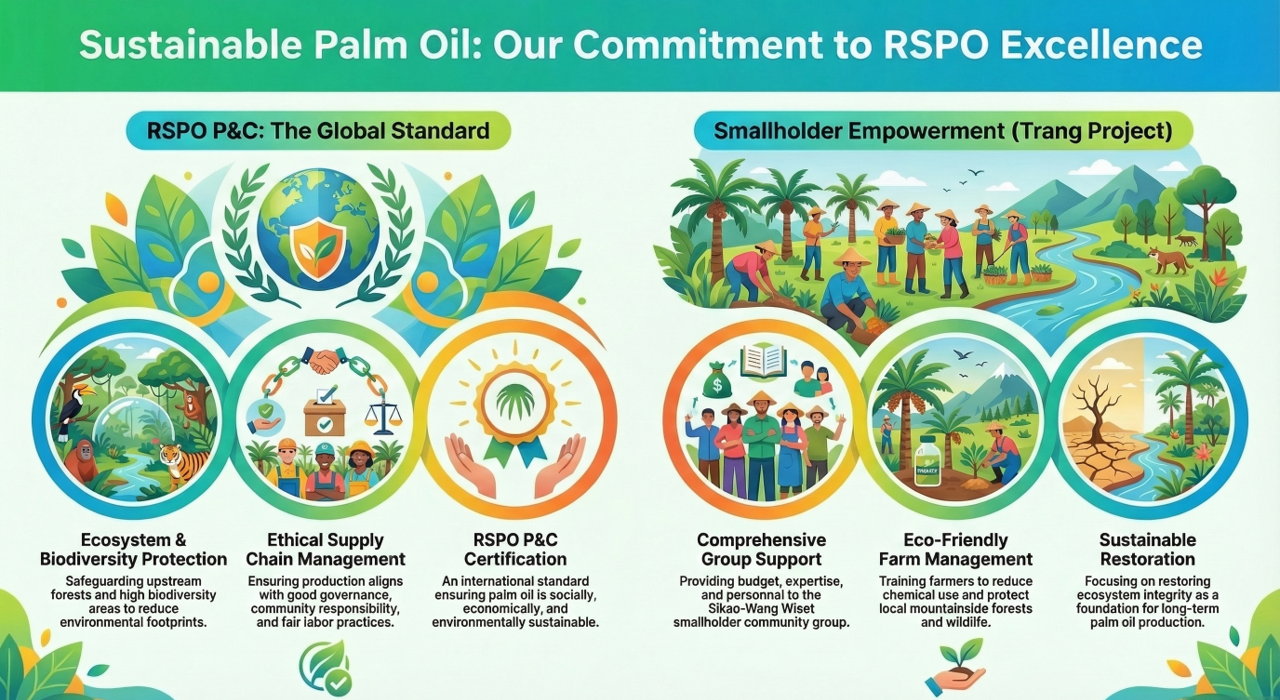
Circular Economy & Packaging Management
The Company is dedicated to conducting business with environmental responsibility, prioritizing resource efficiency, waste reduction within production processes, and the promotion of resource circularity. By integrating Circular Economy principles, we aim to enhance production efficiency, minimize environmental impacts, and generate sustainable economic value.
Management Guidelines
1. Resource Efficiency
Fresh Fruit Bunches (FFB), water, and electricity are the primary resources utilized in the crude palm oil production process. Consequently, the Company prioritizes the efficient and optimized use of these resources, focusing on maximizing the Oil Extraction Rate (OER), minimizing and controlling oil losses, and ensuring the appropriate management of water and electricity consumption throughout the production stages. Furthermore, the Company conducts monthly performance review meetings to establish strategic measures and drive continuous improvement in operational and long-term environmental performance efficiency.
2. Awareness Building
The Company actively fosters employee awareness regarding maximum resource efficiency through the "NICE EVERYDAY" initiative. This program is designed to instill a culture of resource conservation, cultivate environmental consciousness, and encourage employees to participate in reducing resource consumption within their daily lives and throughout the workplace.
3. Promotion of the 3R Principles
The Company educates and encourages employees to adopt the 3R principles (Reduce, Reuse, and Recycle) for sustainable waste management, aiming to minimize environmental impacts. This is achieved by providing knowledge on proper waste segregation and empowering employees to apply these practices both in the workplace and within their households. Furthermore, the Company drives the return of recyclable materials to certified recycling operators. This comprehensive approach effectively reduces waste volume and management costs while supporting overall environmental conservation.
4. Maximizing Value from Industrial Waste
The Company is committed to maximizing the utility of by-products and waste generated from the palm oil production process. By transforming production waste into valuable resources, we minimize environmental impact and promote a zero-waste approach. Examples include:
Palm Fiber and Shells: These materials are utilized as renewable fuel for the Company’s internal operations and are also sold to external customers as biomass energy sources.
Empty Fruit Bunches (EFB): These are sold to external customers for use as renewable fuel or provided to local farmers to be utilized as organic mulch for soil conditioning and moisture retention within palm oil plantations.
Decanter Cake: This by-product is sold to external customers for use as organic fertilizer and is also provided to local farmers to support nutrient cycling and soil enrichment within their palm oil plantations.
Palm Oil Mill Effluent (POME): Wastewater is treated through an anaerobic digestion process to produce biogas, which is then utilized for electricity generation for internal use and supplied to the Provincial Electricity Authority (PEA).
Palm Kernel Cake (PKC): This by-product is sold to external customers for use as a high-quality ingredient in animal feed production.
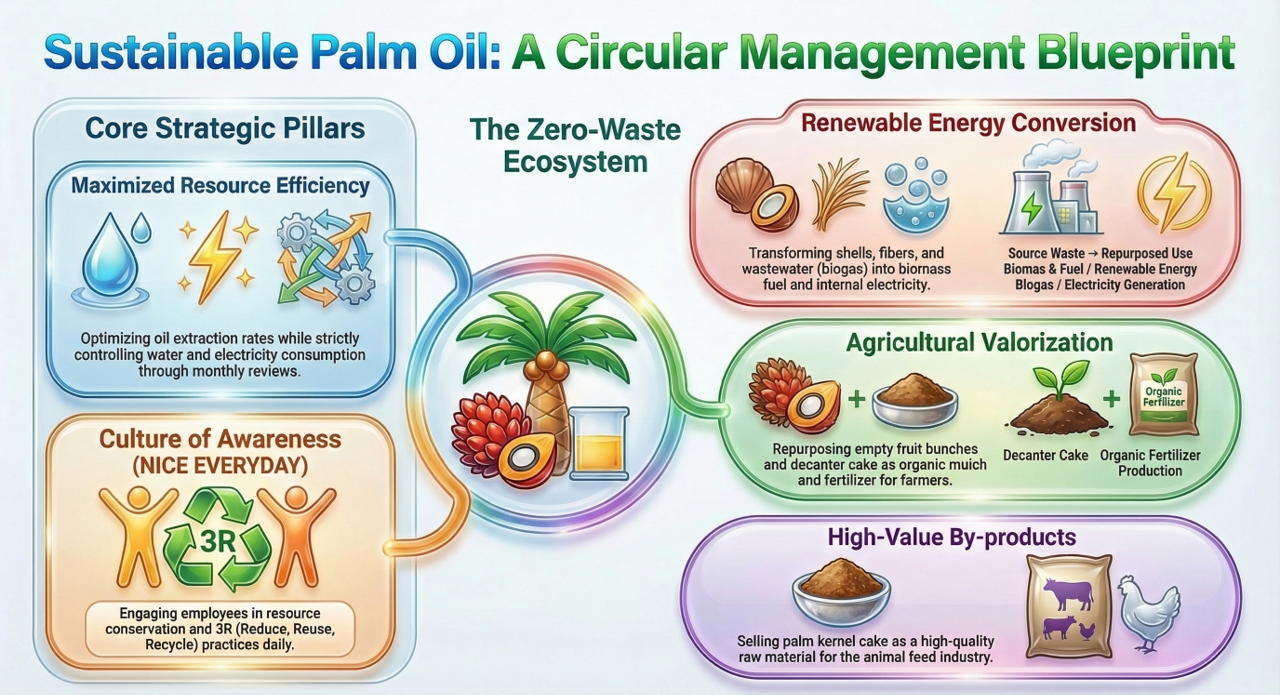
Employees — Plan & Guidelines
Has an Employee Management Plan
Yes
Plan Description
Human Resources Policy
Lam Soon Group is committed to supporting and maintaining a work environment that fosters maximum employee performance, emphasizing teamwork and continuous development to enhance the potential and capabilities of all personnel.
The Company believes that "People" are the key driving force behind organizational success. Therefore, we value employees as valuable resources and are dedicated to caring for them holistically across all dimensions, including capability development, career growth opportunities, engagement, and quality of life.
This ensures all employees have the inspiration and commitment to collectively drive the Company's mission and vision toward sustainable success.
Human Resources Strategy
To achieve these objectives, the Company has established a clear human resources strategy consisting of 4 pillars.
1. Enhance HR Capability
Develop and strengthen the capabilities of the HR team to become strategic partners working closely with various
departments, supporting organizational potential development, effectively driving strategies, and creating tangible business value.
2. Foster Employee Engagement
Promote well-being programs and diverse activities to care for employees' quality of life and create positive
experiences throughout their employment journey.
3. Empower Employee Growth
Develop a modern and comprehensive HR system, from fair human resources policies to systematic development
programs, career management, and succession planning, to create motivation and continuous growth opportunities.
4. Strengthen Employer Brand
Build and communicate Lam Soon's image as an Employer of Choice to attract talented individuals whose values
align with the organization, inviting them to grow and build the future together.
Plan Areas
| Plan Area |
|---|
| Fair employee compensation |
| Employee training and development |
| Promoting employee relations and participation |
| Child labor |
| Occupational health and safety in workplace |
Employees — Workforce
Introduction
Employment
Under the Strengthen Employer Brand strategy, the Company implements fair employment policies based on equality and non-discrimination principles. We focus on recruiting individuals with qualifications and potential suitable for positions, regardless of gender, age, ethnicity, religion, or disability, and provide opportunities for all to demonstrate their potential, develop themselves, and advance in their careers equally and transparently.
The Company has clear policies on fair labor practices, including prohibition of child labor, forced labor in all forms, and currently does not employ migrant workers. The Company strictly complies with labor laws and international standards to create a safe, fair work environment that respects human dignity.
Additionally, the Company aims to create a work environment emphasizing diversity and inclusion by promoting teams with diverse perspectives, experiences, and skills, which serve as crucial foundations for fostering creativity and innovation that drive the organization sustainably.
Workforce — Introduction
The Company prioritizes developing and retaining quality personnel. As of the end of 2025, the Company had a total of 497 employees, comprising 321 male employees (64.6%) and 176 female employees (35.4%).
Employees with Disabilities — Introduction
The Company promotes equality and provides opportunities for persons with disabilities to demonstrate their capabilities at work in compliance with the Empowerment of Persons with Disabilities Act B.E. 2550 (2007). In 2025, a total of 5 persons with disabilities worked in the organization, comprising 1 male employee and 4 female employees with disabilities.
Workforce Data
| Metric | Current Year | Previous Year | Two Years Ago |
|---|---|---|---|
| Total number of employees (Persons) | 497 | 476 | 453 |
| Number of male employees (Persons) | 321 | 301 | 291 |
| Number of female employees (Persons) | 176 | 175 | 162 |
| Total employment of disabled persons (people) | 5 | 5 | 6 |
| Total disabled employees (people) | 5 | 1 | 2 |
| Total male disabled employees (people) | 1 | 0 | 1 |
| Total female disabled employees (people) | 4 | 1 | 1 |
| Total disabled workers who are non-employee (people) | 0 | 4 | 4 |
| Contributions to the fund for promoting and improving the quality of life for disabled persons | 0 | 0 | 0 |
| Total number of male employees in operational level (Persons) | 300 | 275 | 265 |
| Total number of male employees in management level (Persons) | 17 | 21 | 21 |
| Total number of male employees in executive level (Persons) | 4 | 5 | 5 |
| Total number of female employees in operational level (Persons) | 154 | 154 | 143 |
| Total number of female employees in management level (Persons) | 20 | 19 | 17 |
| Total number of female employees in executive level (Persons) | 2 | 2 | 2 |
Employees — Remuneration & Provident Fund
Introduction
The Company prioritizes fair compensation that aligns with employees' capabilities and performance. In 2025, total employee compensation amounted to 273.62 million Baht, an increase from 2024, reflecting the Company's business growth and ongoing commitment to employee welfare.
Remuneration & Provident Fund
| Metric | Current Year | Previous Year | Two Years Ago |
|---|---|---|---|
| Total disabled employees (people) | 273,622,301.2 | 251,730,960.24 | 230,134,028.22 |
| Total male employee remuneration (Baht) | 162,758,483.08 | 151,257,284 | 141,472,834.6 |
| Total female employee remuneration (Baht) | 110,863,818.12 | 100,473,676.24 | 88,661,193.62 |
| Number of employees eligible to participate in PVD (persons) | 460 | 454 | 445 |
| Total number of employees joining employee provident fund (Persons) | 405 | 412 | 407 |
| Percentage of total number of employees joining employee provident fund to total number of employees (%) | 81.49 | 86.55 | 89.85 |
| Number of PVD members / Total eligible employees (%) | 88.04 | 90.75 | 91.46 |
| Total amount of provident fund contributed by the Company (Baht) | 6,371,190.46 | 5,971,051.05 | 5,554,311.15 |
| Total amount of provident fund contributed by employee (baht) | 11,661,469.04 |
Employees — Training & Development
Introduction
Under the Empower Employee Growth strategy, the Company prioritizes continuous and systematic employee development to ensure employees have the knowledge, skills, and abilities necessary to perform effectively and advance confidently in their careers.
The Company has developed the LST Group People Development Framework covering development at all levels and functions, consisting of 3 main programs.
1. Mandatory Program
Essential foundational knowledge development program for all employees to build understanding about the Company and work principles. This includes courses on Compliance, Workplace Safety, Code of Conduct, Sustainability, Digital Tools & Technology, Lam Soon Culture, and Training Orientation Module (TOM) to ensure employees have necessary foundational knowledge with consistent standards throughout the organization.
2. Functional Program
Development programs based on job functions to enhance specialized knowledge and skills in each employee's duties and responsibilities, developing expertise and increasing work efficiency. In 2025, the Company conducted several important training courses as follows
2.1 Basic Bakery Program to enhance product knowledge and bakery techniques for the sales team, enabling
them to better understand products and provide effective customer advice.
2.2 Flour Fundamentals for Bakery Excellence Program co-designed with the Faculty of Food Industry,
King Mongkut's Institute of Technology Ladkrabang, with expert instructors from the faculty delivering
the training.
2.3 Power BI for Business Insight Program to enable employees to analyze and leverage data more effectively in
their work, along with a Power BI Clinic where employees can consult with experts when applying the
knowledge in actual work situations
In addition to training programs, the Company organized the LST Learning & Sharing Day 2025 to provide a platform for employees to share learning experiences and apply knowledge in their work, along with awards for the Internal Trainer team. These activities reflect the 70:20:10 learning approach that the Company uses for continuous employee development.
3. Leadership Program
Leadership development program for employees from Supervisor level and above, focusing on developing the organization's Leadership Competency systematically and continuously.
The Company has developed a Leadership Development Journey covering leadership development across multiple dimensions, including strategy, collaboration, innovation development to enhance and improve work processes, such as AI adoption, self and others awareness, communication, and financial knowledge, to build leaders' readiness to drive the organization toward sustainable success.
Training Data
| Metric | Current Year | Previous Year | Two Years Ago |
|---|---|---|---|
| Average employee training hours (Hours / Person / Year) | 16.05 | 16 | 14.71 |
| Employee development and training expenses (baht) | 730,340 | 638,147.3 | 822,138.56 |
Employees — Occupational Health & Safety
Introduction
Under the Foster Employee Engagement strategy, the Company is committed to creating and maintaining safe, hygienic workplaces conducive to all employees' health, adhering to the principle that "Safety is everyone's responsibility" and believing all accidents are preventable, as a safe work environment is the crucial foundation of employee engagement and quality of life.
The Company has a clear occupational safety and health policy, complying with the Occupational Safety, Health and Environment Act B.E. 2554 (2011) and applying international safety standards in operations.
Occupational Health & Safety Data
| Metric | Current Year | Previous Year | Two Years Ago |
|---|---|---|---|
| Total number of lost time injury incidents by employees (Cases) | 1 | 3 | 4 |
Employees — Labour Relations
Introduction
Employee Engagement
To evaluate program effectiveness and employee engagement levels with the organization, the Company conducted an employee satisfaction survey on health and well-being programs in 2025, with 471 employees participating, representing 77% of all employees.
1. Survey Results The overall satisfaction score was 84% (highest satisfaction level), divided into
1.1 Health Well-being: 79% (satisfied level)
1.2 Finance Well-being: 89% (highest satisfaction level)
1.3 Workplace Well-being: 89% (highest satisfaction level)
2. Employee Satisfaction Score Analysis
The high satisfaction results reflect the success of the Foster Employee Engagement strategy that the Company has continuously implemented, particularly in financial security and workplace environment, which received satisfaction
scores as high as 89%, demonstrating that employees feel comprehensively cared for with good quality of life.
This high satisfaction directly impacts employee engagement with the organization, a crucial factor leading to retaining quality employees, reducing turnover rates, and increasing work efficiency. The Company will use survey results to continuously improve and develop programs to better meet employee needs and build sustainable engagement.
Labour Relations Data
| Metric | Current Year | Previous Year | Two Years Ago |
|---|---|---|---|
| Total voluntary resignations (Persons) | 36 | 10 | 53 |
| Male employees who voluntary resigned (Persons) | 25 | 6 | 41 |
| Female employees who voluntary resigned (Persons) | 11 | 4 | 12 |
| Percentage of employee turnover leaving the Company voluntarily (%) | 7.24 | 2.1 | 11.7 |
| Evaluation result of employee engagement |
Employees — Employee Representation
Employees Are Represented Collectively
Yes
Forms of Representation
| Form |
|---|
| Welfare committee |
| Employee committee |
| Labor union |
| Labor relations committee |
Employees — Targets
Has Set Employee Targets
Yes
Targets
| Indicator | Target Areas | Target Year | Target Year — Description |
|---|---|---|---|
| Employee engagement level from annual survey Improvement in leadership skills Application of knowledge and skills from training and development programs in actual work | 2983 · Description: Fair employee compensation · 2984 · Description: Employee training and development · 2985 · Description: Promoting employee relations and participation · 2988 · Description: Safety and occupational health at work · 2989 · Description: Non-discrimination · 2990 · Other name: Employee Engagement · Description: Others | 2,026 | Employees achieve engagement at "Engage" level or higher
Leadership skills assessment results from supervisors and subordinates (180-degree) increase by at least 20%
100% completion of projects assigned from training programs |
Employees — Performance & Outcomes
Has Performance Results
Yes
Performance Description
Employee Benefits and Engagement
Under the Foster Employee Engagement strategy, the Company believes that caring for employees across all dimensions of health and well-being is the crucial foundation of engagement and organizational sustainability. The
Company focuses on promoting employee engagement through 3 main well-being programs.
1. Health Well-being
Promoting physical and mental health through exercise activities, health education, and health promotion programs such as the Step Challenge (step counting competition) and 90 Days Challenge (90-day weight loss competition) to sustainably build good health, with the goal of ensuring employees have energy for work and good quality of life.
2. Finance Well-being
Building financial security for employees to have a stable savings foundation and be debt-free through activities providing knowledge on financial management, investment, savings, and financial consultation to promote financial discipline and long-term planning.
3. Workplace Well-being
Developing a clean, hygienic, and safe work environment conducive to efficient work, from workspaces, cafeterias, and restrooms, to drinking water systems and various facilities, to enable employees to work effectively with good quality of life. In 2025, the Company implemented 2 significant workplace improvement projects.
3.1 The Cafeteria Improvement Project (Bangpoo Branch), modernizing the cafeteria to meet standards and hygiene principles, expanding dining areas for comfort and convenience, installing modern and safe kitchen equipment to enhance food quality and employee welfare.
3.2 The Employee Housing Improvement Project (Trang Branch), renovating 21 housing units to new, modern, and clean conditions, repairing and strengthening structures for safety, and providing necessary basic furniture and equipment to enhance employee comfort and well-being.
Additionally, beyond health and well-being programs, the Company provides diverse benefits to care for employees' quality of life, including health and life insurance, provident fund, children's education scholarships, uniforms and work equipment, various assistance allowances and recreational activities, etc.
Awards and Labor Relations Achievements
As a result of continuous and systematic employee care following all four human resources strategy pillars, in 2025, Lam Soon Group received outstanding recognition in labor relations and welfare from government agencies, receiving awards from all branches nationwide.
1. Bangna Branch received the Outstanding Establishment in Labor Relations and Welfare Award 2025 at the national level for the 4thconsecutive year from the Department of Labour Protection and Welfare, Ministry of Labour.
2. Bangpoo Branch received the Outstanding Establishment in Labor Relations and Welfare Award 2025 at the provincial level for the 9thconsecutive year from the Samut Prakan Provincial Labour Protection and Welfare Office.
3. Trang Branch received 3 certificates, comprising
3.1 Outstanding Establishment in Labor Relations and Welfare Award at the provincial level for the 9thconsecutive year.
3.2 Good Labour Practice (GLP) Award for the 6thconsecutive year.
3.3 Model Establishment in Occupational Safety Health and Work Environment Award at the provincial level for 2025.
Receiving awards from all branches nationwide for consecutive years reflects fair and consistent employee care standards throughout the organization. Regardless of branch, all employees receive care at the same standard. These awards also demonstrate the Company's commitment to maintaining and continuously elevating standards, along with building strong labor management systems, good labor relations systems, and comprehensive welfare.
Furthermore, these awards confirm the Company's commitment to conducting business with social responsibility by caring for employees to have good quality of life, receiving protection according to international standards and human rights and labor principles, while building sustainable engagement between employees and the organization.
Customers — Plan & Guidelines
Has a Customer Management Plan
Yes
Plan Description
1. Be committed to develop and deliver products of high quality and high standard that meet customer requirements under advanced production technology, including high efficiency with a system to inspect product quality at every step in a fair terms and conditions, as well as continuously monitoring and improving customer satisfaction.
2. Manufacture quality products, while transparently and fairly complying with contracts, agreements, or conditions given to customers. If this cannot be fulfilled, negotiate with customers in advance to jointly find remedies and prevent damage.
3. Disclose product information completely, accurately, promptly, and factually to provide customers with useful information in making decisions. Any actions that may cause misunderstanding or misleading trust regarding the product quality must be prevented.
4. Provide communication channels for customers’ complaints, while doing one’s best to promptly address their needs.
5. Always value the confidentiality of customers’ information, while refraining from exploiting such information for personal or related person' gains.
6. Ensure that there is a process to handle problems and complaints from customers and strive in the best possible way to provide customers with swift responses, including preparing a customer satisfaction assessment in order to continue to improve and develop products and services.
Plan Document Link
https://lamsoon.co.th/wp-content/uploads/2024/03/LST-CODE-OF-BUSINESS-CONDUCT-Booklet-EN-11032024ver.Final_.pdf
Page Number in Report
19
Plan Areas
| Plan Area |
|---|
| Responsible production and services for customers |
| Communication of product and service impacts to customers/consumers |
| Development of customer satisfaction and customer relationship |
| Protection of customer personal information |
Customers — Satisfaction Results
Customer Satisfaction Results
| Metric | Current Year | Previous Year | Two Years Ago | Remark |
|---|---|---|---|---|
| Evaluation results of customer satisfaction | 1 | 1 | 1 | Lam Soon (Thailand)— Committed to Continuous Service Improvement for Customer Satisfaction At Lam Soon (Thailand) Public Company Limited, we recognize our customers as the true heart of our business. We are committed to enhancing product and service quality continuously to ensure the highest level of customer satisfaction. Each year, Lam Soon conducts a Customer Satisfaction Survey to gather valuable insights, feedback, and expectations directly from our customers. These results serve as a foundation for improving our products, services, and overall customer experience — ensuring greater efficiency, responsiveness, and care in every aspect of our operations. The Company believes that genuinely listening to customers is the key to sustainable growth. This ongoing commitment drives us to deliver ever-improving value and to strengthen the trust and satisfaction of our customers throughout Thailand. Based on the recent customer satisfaction survey, feedback indicated areas for improvement in price adjustment communication and delivery service. As part of the Customer Satisfaction Improvement Plan, the company has therefore set a higher Service Level target for Logistics at 98%, compared to 95% in 2023. This reflects our continued commitment to enhancing service quality and ensuring timely, accurate, and efficient delivery to customers. In the Sales Department, process improvements have been made to accelerate and streamline price information communication to business partners through the following initiatives: • Developed a (centralized price notification system to ensure all relevant teams and partners have real-time access to updated price information. • Established clear communication timelines and implemented automated notifications via digital channels such as email and internal communication groups, ensuring partners receive timely updates. • Conducted sales and customer service training sessions to strengthen communication consistency, accuracy, and responsiveness to customer inquiries. • Integrated sales and logistics data systems to enable proactive delivery planning and improve on-time performance. These actions have significantly enhanced customer satisfaction in 2025 which reached the highest level in the past 15 years. 2025: 90.8% 2024: 83.2% 2023: 90.3% |
Customers — Targets
Has Set Customer Targets
Yes
Targets
| Indicator | Target Areas | Base Year | Base Year — Description | Target Year | Target Year — Description |
|---|---|---|---|---|---|
| Number of new customers | 3011 · Other name: Increase the number of new customers · Description: Other | 2,024 | Gained at least 300 new customers | 2,025 | Gained at least 300 new customers |
| Maintain current customers | 3011 · Other name: Maintain current customers · Description: Other | 2,024 | Maintain at least 2,500 current customers/month | 2,025 | Maintain at least 2,500 current customers/month |
Customers — Performance & Outcomes
Has Performance Results
Yes
Performance Description
The Company has established a systematic procedure for handling complaints and partner requirements in accordance with the Standard Operating Procedures (SOP) to ensure that issues are resolved promptly, transparently, and effectively. When a problem is reported by a partner, the information is recorded and immediately forwarded to the relevant departments, such as Sales, Marketing, Research and Development (R&D), Quality Assurance (QA), and Production, to jointly analyze the root cause and determine appropriate corrective actions within a clearly defined timeframe. Progress is continuously monitored, and updates are communicated back to the partner to reinforce confidence in the customer care process. In addition, information from complaints is systematically analyzed to prevent recurrence and used as input for improving product quality, packaging, and organizational processes on an ongoing basis. As a result, in 2025 the Company achieved a higher level of customer satisfaction compared to the previous year.
Community & Social — Plan & Guidelines
Has a Community & Social Plan
Yes
Plan Description
Community and Social Management Plan
The Company operates under "The NICE Way" concept, believing that business can grow alongside creating value for society, communities, and the environment sustainably. The Company emphasizes continuous care and contribution to communities through comprehensive community and social management plans covering the following areas
1. Education
The Company promotes education and skill development for youth and communities through knowledge transfer, practical activities, and educational institution support to enhance essential knowledge and life and career skills.
2. Forestry and Natural Resources
The Company is committed to conserving and restoring natural resources, particularly aquatic ecosystems and green spaces, to maintain environmental balance and create community sustainability.
3. Occupational Health, Safety, Health and Quality of Life
The Company promotes community health and quality of life through nutrition support, environmental improvements, and activities that enhance well-being.
4. Underprivileged Groups and Disaster Victims
The Company assists disaster victims to alleviate hardship and create stability for those in need.
5. Reducing Social Inequality
The Company aims to bridge social gaps through access to food, nutrition, and essential resources for living, especially for vulnerable communities and the underprivileged.
Plan Areas
| Plan Area |
|---|
| Education |
| Forests and natural resources |
| Occupational health, safety, health, and quality of life |
| Disadvantaged and vulnerable groups |
| Reducing inequality and promoting social equality |
Community & Social — Targets
Has Set Community & Social Targets
Yes
Targets
| Indicator | Target Areas | Base Year | Target Year | Target Year — Description |
|---|---|---|---|---|
| Promote education and skill development for youth and communities Conserve and restore natural resources continuously Promote community health, food security and reduce inequality | 3037 · Description: Education · 3041 · Description: Occupational health, safety, health, and quality of life · 3039 · Description: Forests and natural resources · 3042 · Description: Disadvantaged and vulnerable groups · 3044 · Description: Reducing inequality | 2,025 | 2,026 | Number of activities
Number of meals, CO2e and food waste reduction |
Community & Social — Performance & Outcomes
Has Performance Results
Yes
Performance Description
Community and Social Management Performance
In 2025, the Company implemented community and social projects and activities under "The NICE Way" approach as follows
1. Education
1.1 "Sharing Knowledge to College" Activity
The Company organized knowledge transfer on Basic Bakery and Product Knowledge, along with workshops using the Company's products to teach cream puff and chiffon cake making for vocational certificate students and staff from Sahapanich Technology College, totaling over 40 participants.
1.2 Outdoor Education and Food Sustainability Activities
The Trang branch organized activities for students and teachers from Kamolsri School, Sikao District, providing knowledge on environmentally friendly sustainable palm cultivation, along with donating 20 palm seedlings and sports equipment worth 4,800 baht to support youth learning and quality of life enhancement.
1.3 Children's Day Support
The Company donated 10,000 baht to Uea Aree Child Development Center, Suan Luang District, to support National Children's Day 2025 activities.
2. Forestry and Natural Resources
2.1 "LST Green Together" Mangrove Planting Activity
The Bangpoo branch organized mangrove planting at the Royal Thai Army Nature Study Center Commemorating Her Majesty the Queen's 72nd Birthday Anniversary (Bang Pu Seaside Resort). Children from Sirindhorn Rajabhat University Child Development Center and Company employees planted 300 mangrove trees, with installation of rain shelter and pathway improvement worth 76,950 baht for Sirindhorn Rajabhat University Child Development Center.
2.2 Aquatic Animal Release Activity (9th Consecutive Year)
The Trang branch organized aquatic animal release with Khuan Khun Subdistrict Municipality at the 84th Birthday Anniversary Public Park, Trang Province, releasing over 130,000 silver barb, Asian swamp eel, and Bala shark to restore ecosystems and promote natural resource conservation.
3. Underprivileged Groups and Disaster Victims
3.1 Support for the Ministry of Social Development and Human Security
The Company donated "Yok" brand palm oil to the Ministry of Social Development and Human Security (MSDHS) for distribution to vulnerable population groups nationwide facing hardship, particularly from flood situations in northern and northeastern provinces, as well as unrest situations in the Thai-Cambodia border areas.
3.2 Southern Flood Relief Assistance
The Company donated "Yok" brand palm oil worth 126,200 baht to the Volunteer Spirit Network Foundation in Times of Trouble, Thai Red Cross Society, to support southern flood victims. The Company is committed to being part of the supporting force for Thai society, extending care and assistance through quality products to people facing difficulties in all situations.
4. Occupational Health, Safety, Health and Quality of Life, and Reducing Social Inequality
4.1 Memorandum of Understanding with SOS Foundation under "NICE Nourish with SOS" Program
The Company signed a Memorandum of Understanding with Scholars of Sustenance (SOS) Foundation to promote sustainable consumption through Kitchen Rescue and School Healthy Meals programs, delivering surplus quality food to vulnerable communities, small schools, and social organizations. This collaboration creates positive impacts across multiple dimensions, including education (providing knowledge on food and nutrition), health and quality of life (strengthening food security and reducing nutritional inequality), and environment (reducing food waste and greenhouse gas emissions).
4.2 "NICE Nourish with SOS" Activity (Round 1)
The Company organized activities at Mon Canal Community, Lat Krabang District, distributing food to 84 households and delivering cooking products to 8 additional communities, totaling over 4,210 kilograms equivalent to 17,681 meals, while reducing greenhouse gas emissions by 10,651 kilograms of carbon dioxide equivalent (CO2e).
4.3 "NICE Nourish with SOS" Activity (Round 2)
The Company organized activities at Uea Aree Child Development Center, Suan Luang District. Executives and volunteer employees prepared meals and organized developmental activities for children, while delivering surplus quality food to community families. This activity reduced food waste by 240 kilograms equivalent to 1,000 meals and reduced carbon dioxide emissions by 607.20 kilograms.
Through various projects and activities in 2025 under "The NICE Way" approach, the Company created tangible positive impacts on communities and society in education promotion, environmental conservation, nutritional inequality reduction, and assistance to underprivileged groups and disaster victims. The Company is committed to continuous and sustainable operations to jointly build a strong society with good quality of life.
Law Violation Incidents
Law Violation Incidents
| Metric | Current Year | Previous Year | Two Years Ago |
|---|---|---|---|
| The total number of cases or incidents of significant violations of laws or regulations regarding social and human rights (Cases) | 0 | 0 | 0 |
| The total number of cases or incidents that cause significant labor disputes (Cases) | 0 | 0 | 0 |
| The total number of cases or complaints related to consumer rights violations (Cases) | 0 | 0 | 0 |
| The total number of cases or complaints related to partner rights violations (Cases) | 0 | 0 | 0 |
| The total number of cases or incidents that cause disputes with the community/society (Cases) | 0 | 0 | 0 |
| The total number of cases or incidents related to cyber security or customer data breaches (Cases) | 0 | 0 | 0 |
| The total number of cases or incidents related to safety and occupational health at work (Cases) | 0 | 0 | 0 |